
Glycation is a hidden mechanism that ages skin faster than time itself. In skincare, there's a lot of talk about UV radiation, oxidative stress, and free radicals. But there's another process that deserves much more attention: glycation . It's a chemical mechanism occurring in the deeper layers of the skin that literally "caramelizes" structural proteins, rendering them stiff and biologically inactive.
As a brand that has been creating cosmetics consciously for 15 years—with respect for skin biology and a deep understanding of molecular processes—Orientana has long analyzed the impact of glycation on skin condition. This observation led to the development of formulas with adaptogens such as Reishi, Ashwagandha, Tremella, and the biotechnological retinoid NovoRetin™, which actively inhibit the effects of glycation.
What is glycation and why does skin begin to “harden”?
Glycation is a spontaneous reaction between sugars and proteins—in the skin, it primarily affects collagen and elastin. When blood glucose levels rise (after high-sugar meals, insulin resistance, stress, or sleep deprivation), glucose molecules begin to attach to the skin's supporting fibers.
As a result of this reaction, AGEs ( Advanced Glycation End Products) are formed. These are structures that:
- stiffen collagen fibers ,
- block fibroblasts from producing new collagen,
- they fix wrinkles that become "engraved" in the skin,
- give the complexion an earthy , slightly yellowish tint, typical of skin subjected to chronic glycation.
How to recognize if your skin is glycating? Symptoms visible in the mirror.
- despite care, the skin becomes less elastic and breaks more quickly,
- fine mesh wrinkles appear, especially under the eyes and around the mouth,
- the skin loses its radiance and looks "tired from the inside",
- the skin color begins to become more yellowish or earthy,
- makeup doesn't stay on as well because the skin loses its elastic structure,
- wounds and redness take longer to heal - regenerative processes are slowed down.
In professional cosmetology, this is referred to as so-called sugar-hardened skin – biologically young, but with visible accelerated aging.
Why do dermatologists say that glycation can age you even more than the sun?
UV radiation damages skin fibers , but glycation prevents their natural renewal , blocks repair mechanisms, and activates chronic inflammation . Clinical studies have shown that AGEs can accumulate in the skin for up to 20–25 years, which explains the sudden deterioration of skin condition around age 35—even if it previously appeared healthy.
Can the effects of glycation be reversed?
It is not possible to completely “desugarize” collagen that has undergone glycation, but you can:
- inhibit the formation of new AGEs,
- activate fibroblasts to produce fresh, elastic collagen,
- trigger the self-destruction of glycated structures through cellular autophagy processes.
And this is where adaptogens and anti- glucatation ingredients , which you will find in Orientana cosmetics, come into play.
Adaptogens in Orientana cosmetics – an intelligent shield against glycation
Reishi – the mushroom of longevity and the guardian of collagen
In Asian medicine, called the "elixir of immortality." Research has shown that Reishi:
- reduces oxidative stress accompanying glycation,
- protects collagen fibers from hardening,
- stimulates cellular detoxification of AGEs.
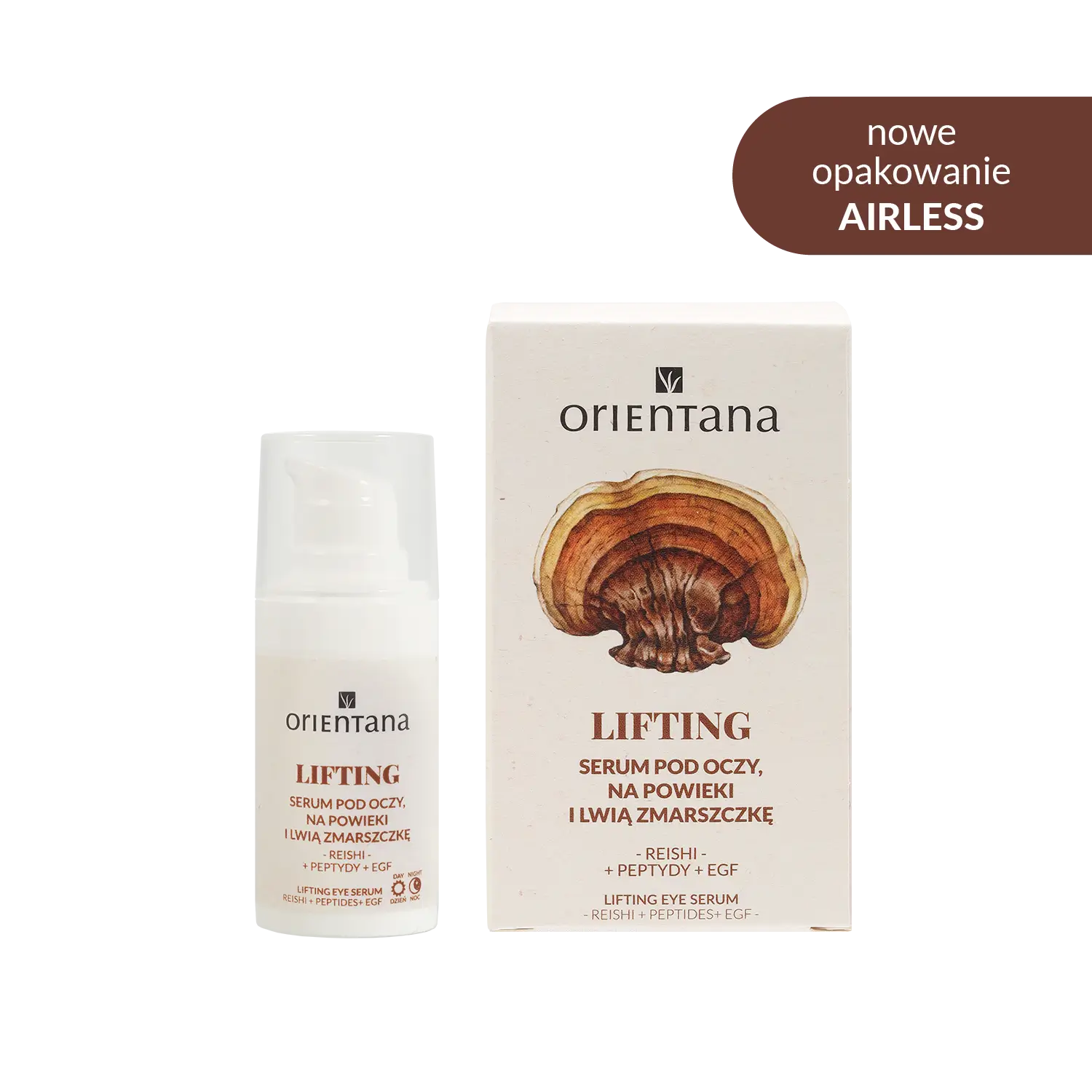
You will find it in Orientana products from the Reishi series, such as HydroSerum Reishi and lifting creams with adaptogens.

Ashwagandha - repair of glycolic skin
Ashwagandha has adaptogenic properties, supports skin's metabolic balance, and reduces inflammation caused by AGEs. Combined with CICA (Centella asiatica) and niacinamide, it supports:
- regeneration of skin damaged by glycation,
- improvement of microcirculation and skin tone,
- restoring freshness and elasticity.
This is how the CICA Niacinamide Ashwagandha Serum works.
Other ingredients that help prevent skin damage caused by glycation
Glutathione - a strong antioxidant
Glutathione protects cells against free radicals and toxins, regenerates vitamins C and E, which neutralize free radicals.
Vitamin C – essential for collagen synthesis
Vitamin C is a powerful antioxidant that neutralizes free radicals and supports collagen synthesis, leaving skin firmer and more radiant. It also evens out skin tone, reducing the appearance of discoloration and dullness caused by oxidative stress.

Step-by-step anti-glycation care with Oriental skin philosophy
STEP 1: Cleansing
The delicate Orientana gel does not damage the hydrolipid barrier – glycated skin may be more reactive, so it needs cleansing based on gentle detergents.
STEP 2: Toning - skin preparation
Tonic-essence with gluconolactone and dates gently supports epidermal renewal and improves the absorption of anti-glycation ingredients.
STEP 3: Adaptogenic Serum
- Reishi Serum – antioxidant action and collagen protection.
- Ashwagandha Serum - restoring elasticity and revitalizing glycated skin.
- Hydro Tremella – intense hydration that protects the fibers from stiffness.
STEP 4: Active cream with adaptogens
This is a key step – activation of cellular repair of damaged structures and blocking of new glycation products.
Lifestyle and glycation – care is not everything
Cosmetics can slow down glycation, but it is also worth remembering about daily habits:
- avoiding sudden glucose spikes – less simple sugar, more fiber,
- movement – activity increases the insulin sensitivity of the skin,
- regenerative sleep – glycation accelerates most with chronic sleep deprivation,
- Conscious care with adaptogens – this is a new direction in anti-aging: anti-glycation care.
Questions about glycation
Does glycation only affect people who eat sweets?
No. Glycation also increases with stress, lack of sleep, and inflammation – even with a sugar-free diet.
Is glycation visible on the skin immediately?
It's a slow process. The effects accumulate, and skin begins to look harder and "tired" over the years.
Can cosmetics stop glycation?
Yes – ingredients such as Reishi, Tremella and niacinamide inhibit the formation of AGEs and activate regeneration.
Is glycation the same as oxidative stress?
No, but both processes fuel each other – that’s why skincare must include an adaptogen + antioxidant + hydration.
Is retinol alone enough to “repair” glycation?
Retinoids stimulate collagen, but adaptogens work deeper – they modulate skin metabolism.
Is it possible to “deglyc” the skin?
Partly yes – the autophagy process supported by adaptogens can break down some AGEs.
Does glycation cause discoloration?
Yes – AGEs intensify inflammatory processes and can lead to permanent pigment changes.
Does glycation also affect young skin?
Yes – in women 25+, with irregular meals and stress, structural changes are already observed.
Do anti-wrinkle creams affect glycation?
Not all. You need to look for ingredients labeled as anti-glycation or adaptogenic.
Does Orientana have “anti-glycation” cosmetics?
Yes – Reishi, Ashwagandha, Tremella are ingredients with a proven effect on inhibiting glycation.
Is a sugar-free diet enough?
This is support, but the skin needs direct repair stimuli – serums, creams, cellular detoxification.
Is glycation 100% reversible?
No, but you can rebuild the skin structure by replacing the glycated collagen with new, soft fiber.
Does glycation accelerate skin sagging?
Yes – AGE literally “breaks down” the supporting fibers, which leads to loss of firmness.
Do adaptogens really work?
Yes – this is a scientifically proven group of compounds that regulate metabolic stress in the skin, which is key to glycation.
Can I use Reishi and Tremella together?
Yes – this is the layered anti-glycation care strategy that gives the best results.
The modern approach to skin aging is no longer just about anti-aging, but also about anti-glycation. Glycation is one of the most important accelerated aging processes, but conscious skincare with adaptogens can actually slow down its effects. Orientana cosmetics – with reishi, ashwagandha, and tremella – were created specifically for women who want to maintain skin's elasticity long-term, not just mask the symptoms.