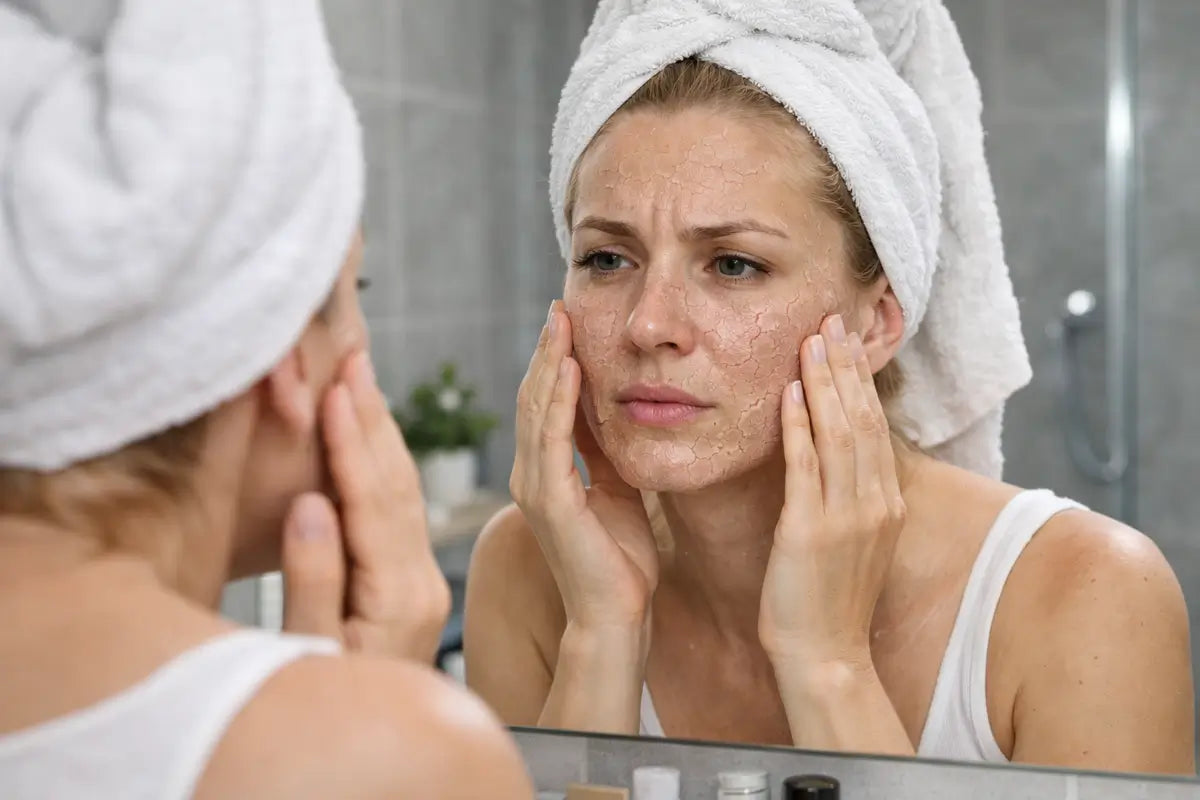
Dry skin is one of the most common problems we face, especially in autumn and winter, but also in summer – due to sun exposure, air conditioning, and excessive cleansing. It manifests itself through tightness, roughness, burning, and sometimes even flaking and micro-cracks.
Importantly, dry skin is not a skin type , but a condition that can be effectively reversed - provided that care focuses on rebuilding the hydrolipid barrier, and not just on temporary "hydration".
What is dry skin?
Dry skin is a condition characterized by impaired protective function of the epidermis and increased transepidermal water loss (TEWL). The hydrolipid barrier, composed of lipids, NMF, and microbiome, no longer effectively protects the skin from external factors.
The result? Skin loses moisture faster and becomes reactive, sensitive, and prone to irritation.
Dryness can affect any skin type - including oily, combination and acne-prone skin.
Moisturizing cosmetics for combination and oily skin

Symptoms of dry skin
The most commonly observed symptoms are:
- feeling of tightness after washing your face
- roughness and uneven skin texture
- burning, stinging, itching
- peeling of the epidermis
- increased sensitivity to cosmetics
- dull, "tired" appearance of the skin
If these symptoms persist for a long time, it means that the skin needs to regenerate its barrier , not another strong peel.
Dry skin and dry and dehydrated skin - what are the differences?
Dry skin is a temporary condition caused by external factors or care errors.
Dry skin is a skin type with genetically low sebum production.
Dehydrated skin can affect any skin type and is caused by a lack of water, not lipids.
In practice: skin can be dehydrated and dry at the same time, so care must work on many levels.
Why is the hydrolipid barrier crucial?
Hydrolipid barrier:
- reduces water loss,
- protects against allergens and microorganisms,
- supports the skin microbiome,
- is responsible for the comfort and elasticity of the skin.
Its damage leads to chronic dryness, hyperreactivity and accelerated skin aging.
That is why at Orientana we say it clearly: first regenerate the barrier, only then the anti-aging or brightening effect .
Causes of dry skin
External factors
- frost, wind, dry air
- heating and air conditioning
- UV radiation
Care errors
- too aggressive cleansing
- cosmetics with alcohol denat.
- frequent peelings
- no protective cream
Internal factors
- dehydration of the body
- a diet low in essential fatty acids
- stress and lack of sleep
- hormonal disorders
How to care for dry skin? - Orientana's regimen
Step 1: Gentle cleansing
Cleansing should remove impurities without stripping protective lipids . Avoid a "squeaky clean" effect.
! See gentle cleansing products
Step 2: Moisturizing and water binding
Dry skin needs ingredients that bind water in the epidermis , such as:
- glycerine,
- hyaluronic acid,
- beta-glucan,
- aloe.
! Check out the moisturizing serum-essence.
Step 3: Rebuilding the hydrolipid barrier
This is a crucial step. The cream should:
- limit TEWL,
- regenerate epidermal lipids,
- soothe irritations.
Search in compositions:
- vegetable oils,
- squalane,
- ceramides,
- plant adaptogens.
Cream-mask with ceramides that support the skin barrier.

What to avoid if you have dry skin?
- denatured alcohol
- mechanical peelings
- too frequent acids
- hot water
- high pH cosmetics
Can dry skin become oily?
Yes. This is a very common defense mechanism. The skin tries to rebuild its own barrier by increasing sebum production. This is why dry skin can be confused with oily or acne-prone skin.
Paradoxically, the more you "degrease" it, the worse it functions .
How long does it take for dry skin to regenerate?
- improved comfort: 7-14 days
- barrier reconstruction: approx. 28 days (one epidermal renewal cycle)
Regularity and simplicity of care are key.
Questions about dry skin
Can dry skin sting after using cream?
Yes, it is a symptom of a disturbed epidermal barrier.
Is dry skin the same as dehydrated skin?
No. Dryness also includes lipid deficiency.
Can retinol be used on dry skin?
Not in the phase of active drying – regeneration first.
Does dry skin age faster?
Yes, a damaged barrier promotes oxidative stress.
Is the problem only with the face?
No, it can also cover the body, hands and scalp.
Summary
Dry skin is a sign that the natural protective barrier has been weakened. Proper care based on gentle cleansing, multi-level hydration, and lipid regeneration can restore skin's comfort, elasticity, and healthy appearance.
👉 Discover Orientana cosmetics created to rebuild the skin barrier - based on plant ingredients, adaptogens and delicate formulas: