Ceramides in cosmetics are one of the fastest-growing trends in skincare, and for good reason. Their unique role in rebuilding the skin barrier, retaining moisture, and supporting a healthy, youthful appearance is why ceramide-based cosmetics are now being incorporated into skincare routines worldwide.
In this article we will explain:
- what are ceramides and how do they work,
- what are their types and formulas in cosmetics,
- how ceramides work in the context of counteracting dryness, aging and irritation,
- the latest biotechnological trends - plant ceramides , including in Orientana cosmetics,
- what products with ceramides are worth considering.
Contents:
- Ceramides - what are they and how do they work in the skin?
- Why are ceramides important in cosmetics?
- Where do ceramides in cosmetic products come from? Natural vs. synthetic
- Ceramides and the skin barrier, hydration and aging
- New trends: plant ceramides and biotechnology
- Recommended cosmetics with ceramides (with links from Orientana)
- How to use ceramides in daily care?
- Summary - are ceramides for you?
Ceramides - what are they and how do they work in the skin?
Ceramides are natural lipids (fats) that constitute a key component of the stratum corneum . In the human body, they are among the most important components of intercellular cement, maintaining the integrity and functionality of the skin barrier.
Their basic functions are:
- retaining water in the epidermis , which prevents drying,
- protection against irritating substances and pathogens ,
- supporting skin elasticity and smoothness .
Without the right amount of ceramides, the skin becomes dry, tight, more susceptible to irritation and ages faster.
Why are ceramides important in cosmetics?
In cosmetics, ceramides act as rebuilding agents for the skin's natural lipid barrier . Along with hyaluronic acid, peptides, and niacinamide, they are often among the ingredients with the deepest and broadest pro-moisturizing effects.
Benefits of using cosmetics with ceramides:
- intense and long-lasting skin hydration ,
- improving the protective function of the skin,
- reducing transepidermal water loss (TEWL) ,
- reduction of dryness, flaking and thinning of the epidermis,
- supporting regeneration after dermatological treatments.
Where do ceramides in cosmetic products come from?
Ceramides in cosmetics can come from various sources:
✔️ Synthetic ceramides
Most often, these are nature-identical ceramides, created in a laboratory, with proven stability and safety. Their structure and effects are very similar to natural ceramides.
✔️ Natural ceramides
Derived from plant or animal lipids, such as soy, wheat, or milk, plant ceramides obtained through modern biotechnological processes are increasingly being used.
Cosmetic biotechnology allows for the production of ceramides of high purity and effectiveness, while respecting the environment and the value of natural raw materials. This solution is increasingly appearing in natural skincare.
Ceramides and the skin barrier, hydration and aging
Ceramides are fundamental for:
- barrier function of the skin - the stronger the barrier, the less water escapes from the epidermis,
- hydration - ceramides act as a "cement" that connects epidermal cells,
- aging processes - with age, the amount of ceramides in the skin decreases, which is why replenishing them in the form of cosmetics is particularly valuable,
- soothing irritations - a stable barrier reduces sensitivity to external factors.
That is why ceramides are often combined with other moisturizing ingredients, such as hyaluronic acid or trehalose, to provide the skin with comprehensive protection and regeneration.
New trends: plant ceramides and biotechnology
Biotechnological plant ceramides
The latest trends in cosmetology are plant ceramides produced using biotechnological methods . Fermentation and enzymatic processes enable the production of highly bioavailable ceramides that are compatible with the skin's natural lipid profile.
These types of ceramides:
- are as effective as synthetic ceramides,
- often have better compatibility with human skin ,
- come from renewable sources,
- support sustainable cosmetics production.
Plant ceramides are therefore becoming synonymous with the combination of efficiency and ecology .
Recommended cosmetics with ceramides from Orientana
Natural care can also benefit from the benefits of ceramides – as in Orientana cosmetics, which combine effective formulas with natural extracts and biotechnological innovations.
Eye cream with ceramides

A light, yet deeply nourishing eye cream that:
- strengthens the delicate skin around the eyes,
- provides ceramides that support the lipid barrier,
- prevents dryness and fine wrinkles.
An excellent step in your daily skincare routine, especially for mature and dehydrated skin.
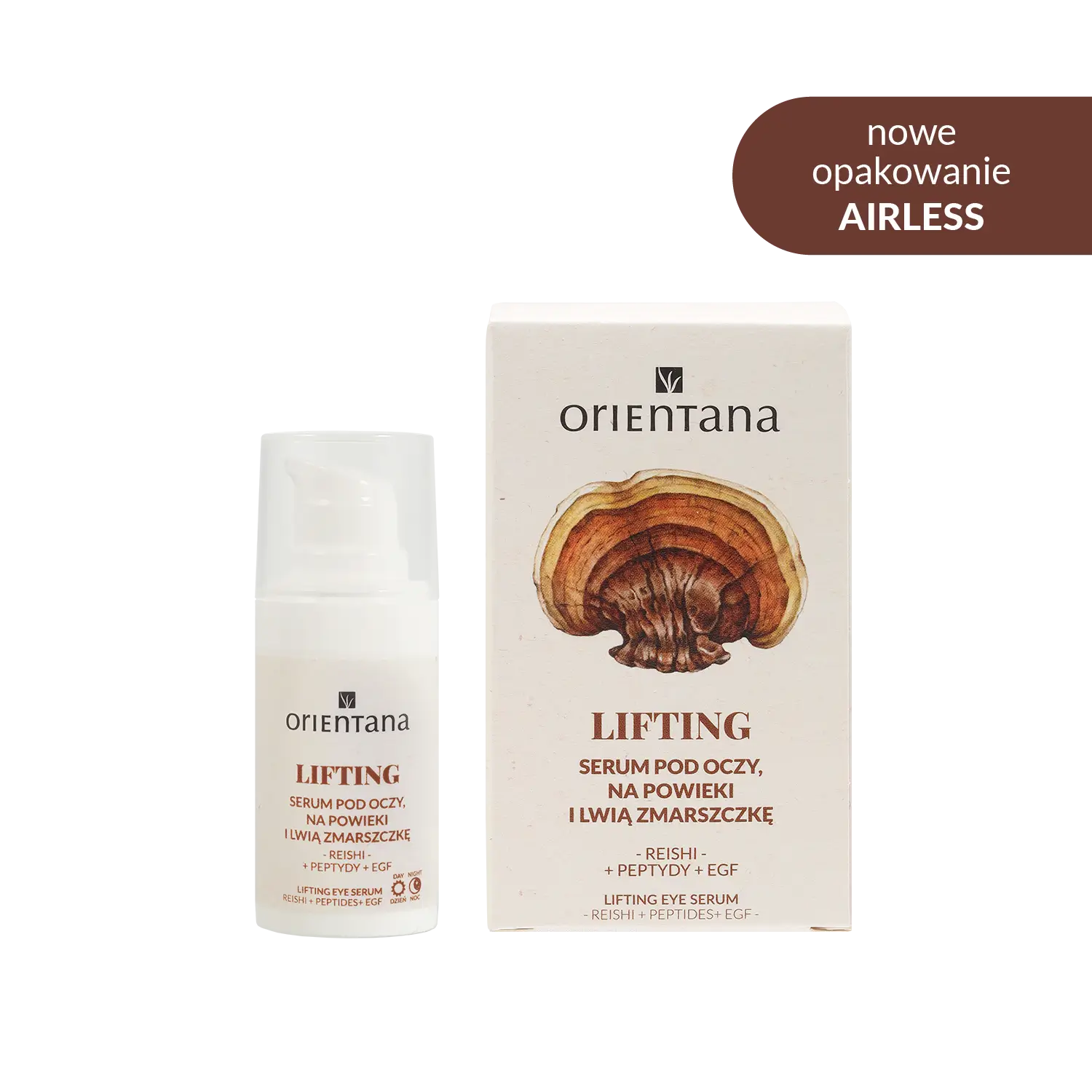
Serum with Ceramides & Reishi

This serum combines:
- ceramides that strengthen the skin barrier,
- Reishi extract - a mushroom with strong antioxidant properties,
- a light formula that absorbs quickly.
Great as a hydration and regeneration booster, both under cream and on its own.
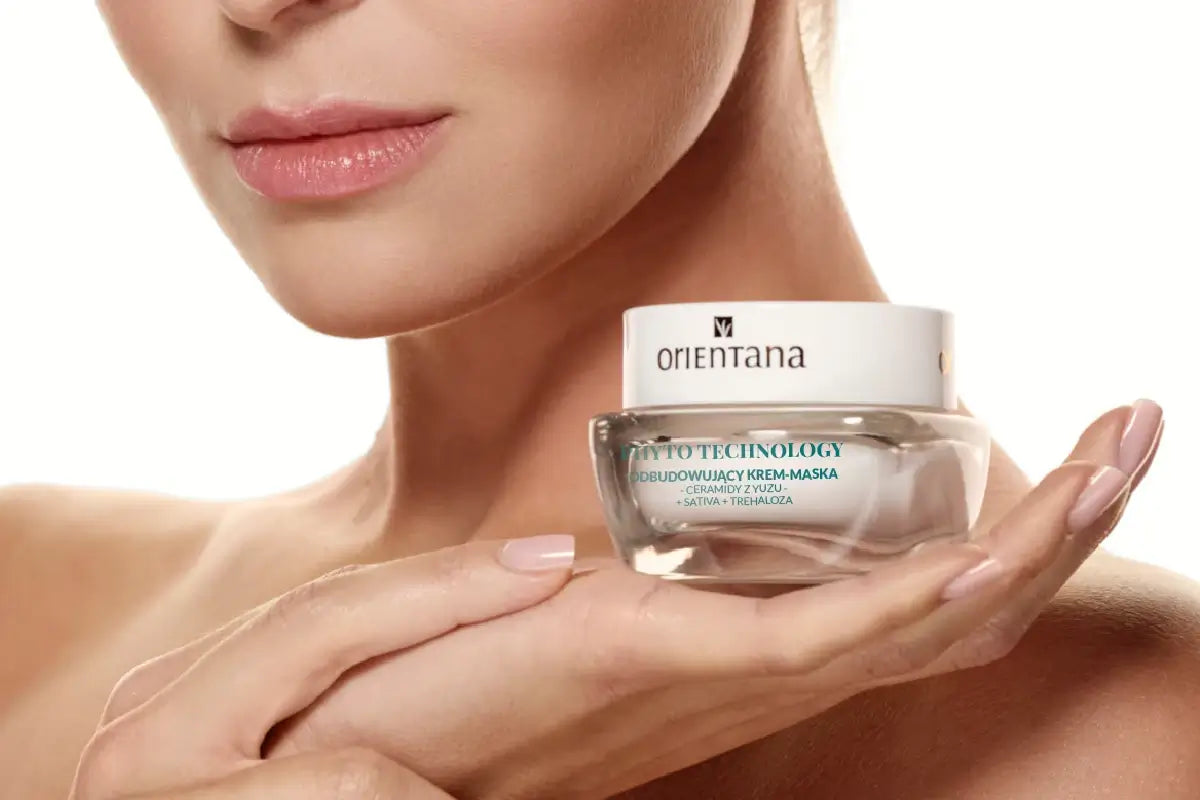
Mask with ceramides, Yuzu Sativa & Trehalose

A modern mask with plant ceramides, trehalose and Yuzu extract - an example of biotechnological innovation in care :
- plant ceramides support the reconstruction of the lipid barrier,
- trehalose moisturizes and protects against moisture loss,
- yuzu provides vitamins and antioxidants.
This is the essence of the latest trends: biotechnology for dry and tired skin .
Types of ceramides in cosmetics - how do they differ and which are the most effective?
Although ceramides are often referred to as a single group of ingredients in skincare, in reality , ceramides are not homogeneous . Human skin contains more than a dozen different types of ceramides , each of which performs a slightly different function in the structure of the epidermal barrier. From the perspective of cosmetology and cosmetic formulation , the type of ceramide , its origin, and its ability to integrate with skin lipids are crucial.
Ceramides naturally occurring in the skin (endogenous ceramides)
In human skin, ceramides constitute up to 40–50% of the lipids in the stratum corneum . Together with cholesterol and free fatty acids, they form an ordered lamellar structure that is responsible for the integrity of the skin barrier.
The best-known endogenous ceramides include:
- ceramide NP (formerly ceramide 3),
- ceramide AP (formerly ceramide 6-II),
- EOP ceramide (formerly ceramide 1).
These fractions are most often imitated in cosmetics because their structure is compatible with skin physiology. With age, due to oxidative stress, UV exposure, and barrier disruption, their amount in the skin gradually decreases, leading to dryness, hypersensitivity, and accelerated aging.
Synthetic ceramides
Synthetic ceramides used in cosmetics are biomimetic ceramides —laboratory-produced but chemically identical to skin ceramides . They are among the most well-studied and stable forms of ceramides in cosmetology.
Their advantages:
- high stability in formulations,
- very good tolerance even by sensitive skin,
- high ability to rebuild the epidermal barrier,
- predictable and repeatable performance.
For this reason, synthetic ceramides are often used in dermatological cosmetics, dermocosmetics and in products intended for the care of dry, atopic and damaged skin.
Plant ceramides - a new generation of ceramides in cosmetics
Plant-derived ceramides , especially those obtained through biotechnology , are becoming increasingly important in modern skincare. Their most common sources are plant lipids, such as:
- rice,
- wheat,
- soy,
- corn,
- citrus fruits (e.g. yuzu).
Plant ceramides are not always chemically identical to skin ceramides, but they may have a functionally similar effect, strengthening the hydrolipid barrier and limiting transepidermal water loss.
In modern formulations - such as the mask with Yuzu Sativa ceramides and trehalose, plant ceramides are often combined with humectants and osmoregulating substances, which enhances their moisturizing and protective effect.
Biomimetic ceramides - the gold standard of barrier care
The highest rated group of ceramides in cosmetology are biomimetic ceramides , i.e. those that:
- mimic the natural lipid profile of the skin,
- they occur in proportions close to physiological,
- are combined with cholesterol and fatty acids.
It's the proper ratio of ceramides to cholesterol and fatty acids that determines effective barrier reconstruction, not the mere presence of ceramide in the INCI composition. Therefore, the best barrier cosmetics are not based on a single ceramide, but on lipid complexes .
Do all ceramides work the same?
No. The effectiveness of ceramides in cosmetics depends on:
- type of ceramide ,
- its concentration,
- method of formulation,
- the presence of accompanying lipids,
- regularity of use.
Therefore, cosmetics containing ceramides – such as serums with ceramides and Reishi or eye creams with ceramides – should be treated as an element of long-term reconstruction of the skin barrier , and not a one-time “rescue” solution.
Which ceramides are the best?
From the perspective of modern cosmetology , biomimetic ceramides and modern, biotechnologically supported plant ceramides are of greatest value . They best address the skin's real needs: strengthening the barrier, improving hydration, and increasing resistance to external factors.
This is why ceramides have become one of the pillars of modern skin care – both in natural cosmetics and advanced barrier formulations.
How to use ceramides in daily care?
To get the most out of ceramides:
- Cleanse your skin - ceramides work best on dry, but not dehydrated, skin.
- Apply a product with ceramides - it can be a serum, cream or mask.
- Protect the serum with a layer of emollients – e.g. cream or oil – to “lock in” moisture.
- Regularity is key - daily use strengthens the skin barrier over time.
Ceramides work great with:
- hyaluronic acid - for deep hydration,
- niacinamide - to strengthen the barrier and brighten,
- antioxidants - for protection against oxidative stress.
Are ceramides for you?
Ceramides in cosmetics are an absolute foundation of modern skincare—regardless of age or skin type. Their unique ability to rebuild the skin's protective barrier makes them an effective ingredient in the fight against:
- dryness,
- aging,
- hypersensitivity,
- loss of firmness.
Thanks to products such as the eye cream with ceramides , the serum with ceramides & Reishi or the mask with ceramides, Yuzu Sativa & Trehalose, care with ceramides becomes natural, effective and pleasant.
If you care about strong, moisturized and healthy skin, ceramides in cosmetics are a step that should not be skipped .
Your questions
Are ceramides safe for all skin types?
Yes. Ceramides are natural skin lipids and are generally well-tolerated by most skin types, from dry, sensitive, to oily or irritation-prone. Their action is based on rebuilding the hydrolipid barrier without irritating the skin, so they are often recommended for sensitive and allergy-prone skin.
Can ceramides be combined with other active ingredients, e.g. retinol or acids?
Yes, ceramides work well with other skincare ingredients. By strengthening the skin's barrier, they can reduce potential irritation caused by retinoids or acids while supporting their moisturizing and regenerative effects.
How often should you use cosmetics with ceramides?
Ideally, use daily, preferably morning and evening , as part of your skincare routine after cleansing. Ceramides have a cumulative effect: regular use strengthens the skin's barrier and gradually improves skin hydration.
Do ceramides help with dermatological problems such as atopic dermatitis?
Dermatological studies indicate that daily application of cosmetics containing ceramides can significantly improve the condition of the skin in atopic dermatitis (AD) – reducing dryness, flaking, redness and inflammatory symptoms.
Does the source of ceramides (synthetic vs. plant) matter?
Yes, synthetic ceramides are usually chemically identical to natural ones and integrate well with the skin's lipid "cement." Plant-based (biotechnological) ceramides are increasingly being used in natural and organic cosmetics, offering equally high bioavailability with a smaller environmental footprint.
The most important scientific studies on ceramides and their effects
Below are reliable publications from the scientific literature that confirm the role of ceramides in skin care and their impact on the condition of the epidermal barrier:
1. Choi MJ & Maibach HI (2005) - The role of ceramides in the skin barrier
Cited in: American Journal of Clinical Dermatology
- Ceramides play a key role in maintaining the skin's water barrier and protecting it.
- In many skin diseases (e.g. atopic dermatitis), a decrease in ceramide levels is observed.
- Applying ceramides to the skin can help rebuild the barrier and improve skin function.
2. Coderch L. & López O. (2003) - review of ceramide functions in the skin
Cited in: American Journal of Clinical Dermatology
- Ceramides are the main structural lipids in the stratum corneum of the epidermis .
- Together with cholesterol and free fatty acids, they form ordered layers that limit water loss and protect against external factors.
- Ceramide deficiencies are associated with impaired barrier function.
3. Mutanu J. et al. (2010) – the effect of ceramides on the healthy skin barrier
Cited in: Acta Derm Venereol.
- A study comparing ceramide profiles in healthy skin of different age groups.
- Stratum corneum lipids, including ceramides, strongly correlate with the barrier function and moisture level of the skin.
- The study found no significant difference in ceramides with age, highlighting their fundamental role at all ages.
4. Meckfessel MH & Brandt S. (2014) – a review of the structure and function of ceramides
Cited in: Journal of the American Academy of Dermatology
- A review discussing the structure of ceramides, their function in the skin, and their use in skin care products.
- It was emphasized that ceramides can be used as a therapeutic ingredient to improve the skin barrier function.
- This study provides solid scientific support for the use of ceramides in cosmetics.
Bibliography
Choi MJ, Maibach HI. Role of ceramides in barrier function of healthy and diseased skin . Am J Clin Dermatol. 2005;6:215–223.
Coderch L., López O., et al. Ceramides and skin function . Am J Clin Dermatol. 2003;4(2):107–109.
Meckfessel MH, Brandt S. The structure, function, and importance of ceramides in skin. J Am Acad Dermatol. 2014;71(1):177–184.
Summary - Science confirms the effectiveness of ceramides
To sum up, ceramides in cosmetics are not just a fashionable ingredient. They are an active ingredient with scientifically proven effects :
- are the foundation of the skin's protective barrier,
- help maintain proper hydration,
- support regeneration and protection against irritation,
- may improve skin condition in clinical cases (e.g. atopic dermatitis).