Cosmetic Clays - Natural, But Always Safe?
Cosmetic clays have been a symbol of natural skincare for years. They are associated with something simple, effective, and "risk-free." In practice, however, their action is much more complex.
It's not a neutral ingredient.
It's an active ingredient.
And that's why:
- it can spectacularly improve skin condition
- but it can also dry it out, irritate it, and weaken the hydrolipid barrier
The most common problem?
Not the clay itself, but how it's used.
In this article, you'll find concrete information:
- real benefits of clays (no marketing)
- disadvantages rarely talked about
- for whom clays are ideal, and for whom they are risky
If you first want to understand the types of clays and their properties, check out the full guide to cosmetic clays.
If you want to learn more about conscious skincare and understand the full philosophy of natural formulas, check out our natural cosmetics section, where we explain step-by-step how to care for your skin according to its needs.
How do cosmetic clays work on the skin?
Clays are natural clay minerals rich in:
- silicon
- magnesium
- calcium
- iron
Their action is based on two key mechanisms:
1. Adsorption (absorption)
Clay "draws" from the skin's surface:
- excess sebum
- impurities
- toxins
2. Ion exchange (biological action)
It delivers minerals to the skin, supporting:
- regeneration
- microcirculation
- cell function
The result? After using clay, the skin is:
- cleansed
- matte
- smoothed
But that's only one side of the coin.
The main benefits of cosmetic clays
Deep skin cleansing
This is the greatest strength of clays. They act like a "magnet" for impurities.
Regular use helps to:
- unclog pores
- reduce the formation of blackheads
- improve overall skin clarity
Therefore, clays are one of the best solutions for:
- oily skin
- combination skin
- problematic skin
Sebum regulation and support for acne-prone skin
Clays normalize the work of sebaceous glands.
Result:
- less shine
- fewer imperfections
- more balanced skin
Especially effective are:
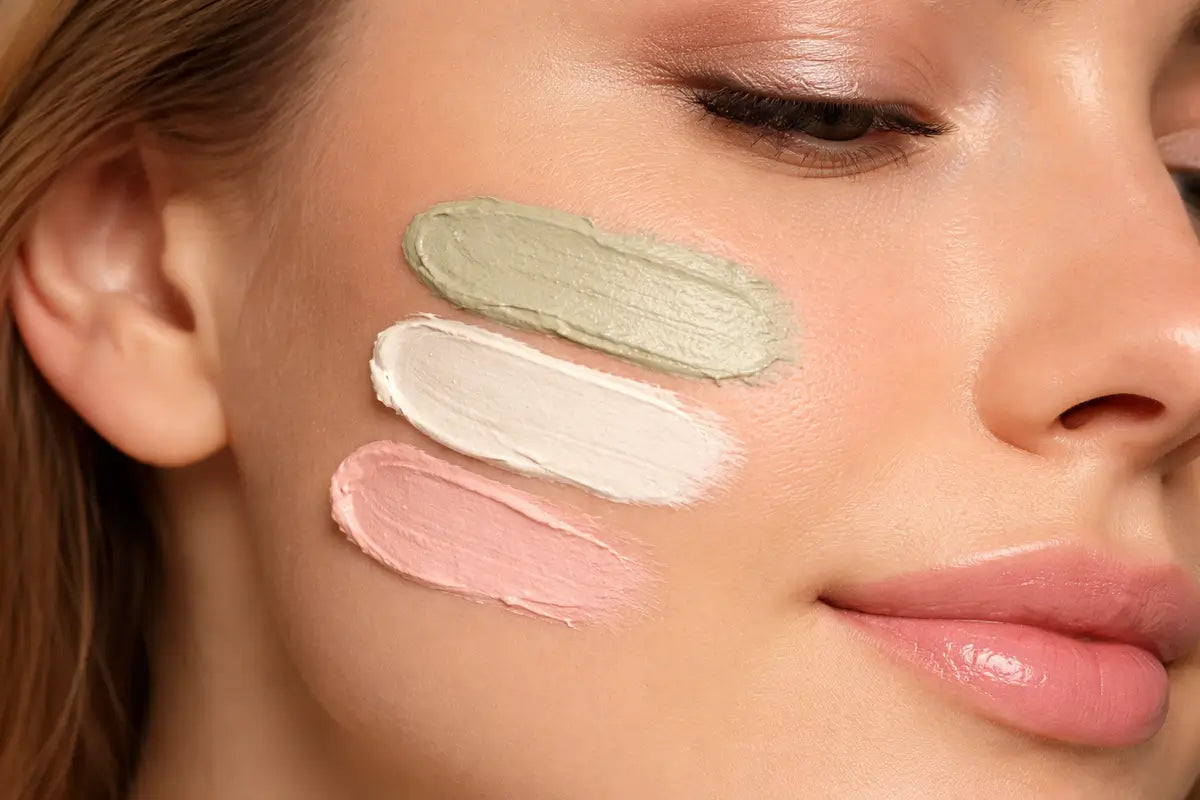
- green clay (strong)
- ghassoul clay (more balanced)
Pore minimization and improvement of skin texture
After using clay, pores are optically:
- less visible
- "cleaner"
The skin becomes:
- smoother
- more even
This effect is often visible after the first use.
Natural composition and simple formula
Clays are one of the purest cosmetic ingredients.
They do not contain:
- preservatives
- fragrances
- synthetic additives
Therefore, they are often chosen by people looking for:
- minimalism in skincare
- "clean beauty"
Instant refreshing effect
After rinsing off the clay, the skin looks:
- fresh
- slightly brightened
- more "alive"
That's why clays are often used:
- before an important outing
- as a quick reset for the skin

Disadvantages of cosmetic clays - what few people talk about
This is the most important part of this article. Because this is where the biggest competitive advantage lies.
Risk of skin dryness
Clays - especially green ones - can strongly degrease the skin.
If used:
- too often
- too long
- without after-care
they can lead to:
- dehydration
- a feeling of tightness
- worsening of skin condition
Disruption of the hydrolipid barrier
This is a problem that is rarely communicated.
Too frequent use of clays:
- removes natural lipids
- weakens the protective barrier
- increases skin sensitivity
Paradoxical effect:
❇️ skin starts producing more sebum

The most common mistake: dried clay
This is a classic.
Clay should NOT dry on the face.
Why?
- it starts to "pull" water from the skin
- instead of cleansing - it dries
- it can cause micro-irritations
Not every clay suits every skin type
It's not a universal product.
- oily skin → OK
- sensitive skin → carefully
- dry skin → often NO
Poorly chosen clay = worsening skin condition
Possible irritations
For skin that is:
- reactive
- thin
- prone to broken capillaries
clays can cause:
- redness
- burning
- discomfort
For which skin type are clays best?
You will achieve the best results with skin that is:
Oily and combination
- sebum reduction
- pore cleansing
Acne-prone
- support in fighting imperfections
Normal (occasionally)
- as a reset and cleanse
And when to be careful?
Dry skin
- only gentle clays (white, pink)
- rarely
Sensitive skin
- short applications
- always with hydration
When can clay harm the skin?
Most often when:
- you use it more than twice a week
- you allow it to dry
- you don't moisturize your skin afterwards
- you have a damaged hydrolipid barrier
- you use too aggressive a clay
How to use clays so they work and don't harm?
This is where most people make the difference between "okay" and "wow."
- do not let it dry (spray with hydrolat or water)
- use 1-2 times a week
- choose clay according to skin type
- always finish with moisturizing care
- do not leave the mask on for too long
❇️ Ideally: after the clay, use a toner and a hydrating serum (e.g., with tremella or adaptogens)
Benefits and drawbacks of cosmetic clays - summary
Clays are an excellent skincare tool, but only when used consciously.
Benefits:
- deep cleansing
- sebum regulation
- improved skin texture
Drawbacks:
- risk of dryness
- possible irritation
- easy to make mistakes in application
Most important?
Clay is not a "mask for everyone."
It's a tool that needs to be used skillfully.
FAQ - frequently asked questions about cosmetic clays
Does clay dry out the skin?
Yes, especially with improper use.
Can clay be used daily?
No, optimally 1–2 times a week.
Does clay help with acne?
Yes, it supports cleansing and sebum reduction.
Does clay clog pores?
No, it does the opposite.
Is clay good for dry skin?
Only selected types and very rarely.
Do you need to moisturize skin after clay?
Always.
Can clay be irritating?
Yes, especially for sensitive skin.
How long should clay be left on the face?
Until it is damp.
Does clay work immediately?
The cleansing effect – yes.
Can clays be mixed?
Yes, this is a common practice.
If you want to fully harness the potential of clays, one thing is key: selecting them for your skin and conscious use.
Check which clay best suits your needs and combine it with skincare that supports your skin's barrier – then you will see a real difference.