
A non-comedogenic cream is the foundation of skin care for blemish-prone skin. Learn how it works and discover Orientana's non-comedogenic creams: HydroTremella, Reishi, and Snail Slime.
Did you know that many skin problems – from blackheads to inflammation – result from improperly chosen skin care? A cream that is too heavy can clog pores and exacerbate imperfections. That's why in cosmetology, we increasingly emphasize the importance of non-comedogenic formulas – those that do not cause blackheads.
In this guide:
• I will explain exactly what a non-comedogenic cream is,
• I will show why it is worth using,
• I will look at ingredients that may promote or prevent comedogenicity,
• and recommend three proven solutions from Orientana: HydroTremella sebum-regulating cream, Snail Slime cream, and Reishi creams.
What does non-comedogenic cream mean?
The term "non-comedogenic" comes from the word comedone (blackhead). A non-comedogenic cream is a cosmetic formulated not to block skin pores and prevent the formation of acne lesions.

What affects the comedogenicity of a cream?
Types of emollients
Some heavy mineral oils and butters can clog pores, while light plant oils (e.g., jojoba, grapeseed) are safe.
Consistency
The lighter, faster-absorbing the formula, the lower the risk of comedogenicity.
Additional active ingredients
Sebum-regulating, soothing, and moisturizing.
Who is non-comedogenic cream for?
• Oily and combination skin – to prevent shine and imperfections.
• Acne-prone skin – to support dermatological treatment and not overburden the skin.
• Sensitive and dehydrated skin – because a non-comedogenic cream can be both gentle and moisturizing.
• Mature skin with a tendency to imperfections – because even skin over 40 can suffer from blackheads.

How to recognize a non-comedogenic cream
• It has a light, gel, or fast-absorbing consistency.
• It contains sebum-regulating ingredients (e.g., niacinamide, adaptogens).
• It is not based on heavy mineral oils or paraffin.
• It does not leave a greasy, occlusive layer, but still provides a feeling of comfort.

Common myths about non-comedogenic creams
"Non-comedogenic cream is only for oily skin."
Untrue – dry and sensitive skin can also benefit from light, nourishing formulas that don't clog pores.
"Non-comedogenic cream doesn't moisturize."
This is a myth – non-comedogenic formulas can contain strong humectants (e.g., hyaluronic acid, Tremella, glycerin).
"Natural oils always clog pores."
Untrue – for example, jojoba, grapeseed, or almond oil are considered safe and non-comedogenic.
Orientana non-comedogenic creams - natural care without the risk of clogged pores
HydroTremella Sebum-regulating Cream
• Contains Tremella fuciformis, a snow mushroom, a plant alternative to hyaluronic acid.
• Intensely moisturizes while regulating sebum secretion.
• Ideal for oily and combination skin – does not weigh down or clog.
• Leaves skin matte yet supple.
Orientana Snail Slime Cream
• Snail slime is a hit in regeneration – it supports skin reconstruction, lightens discolorations, and has anti-inflammatory properties.
• Its light consistency ensures it does not clog pores.
• Especially recommended for acne-prone skin and post-acne scars.
Reishi Creams
• Contain Ganoderma lucidum (Reishi) – an adaptogen and powerful antioxidant.
• Strengthen the skin barrier, protect against oxidative stress.
• Good for both young and mature skin with a tendency to imperfections.
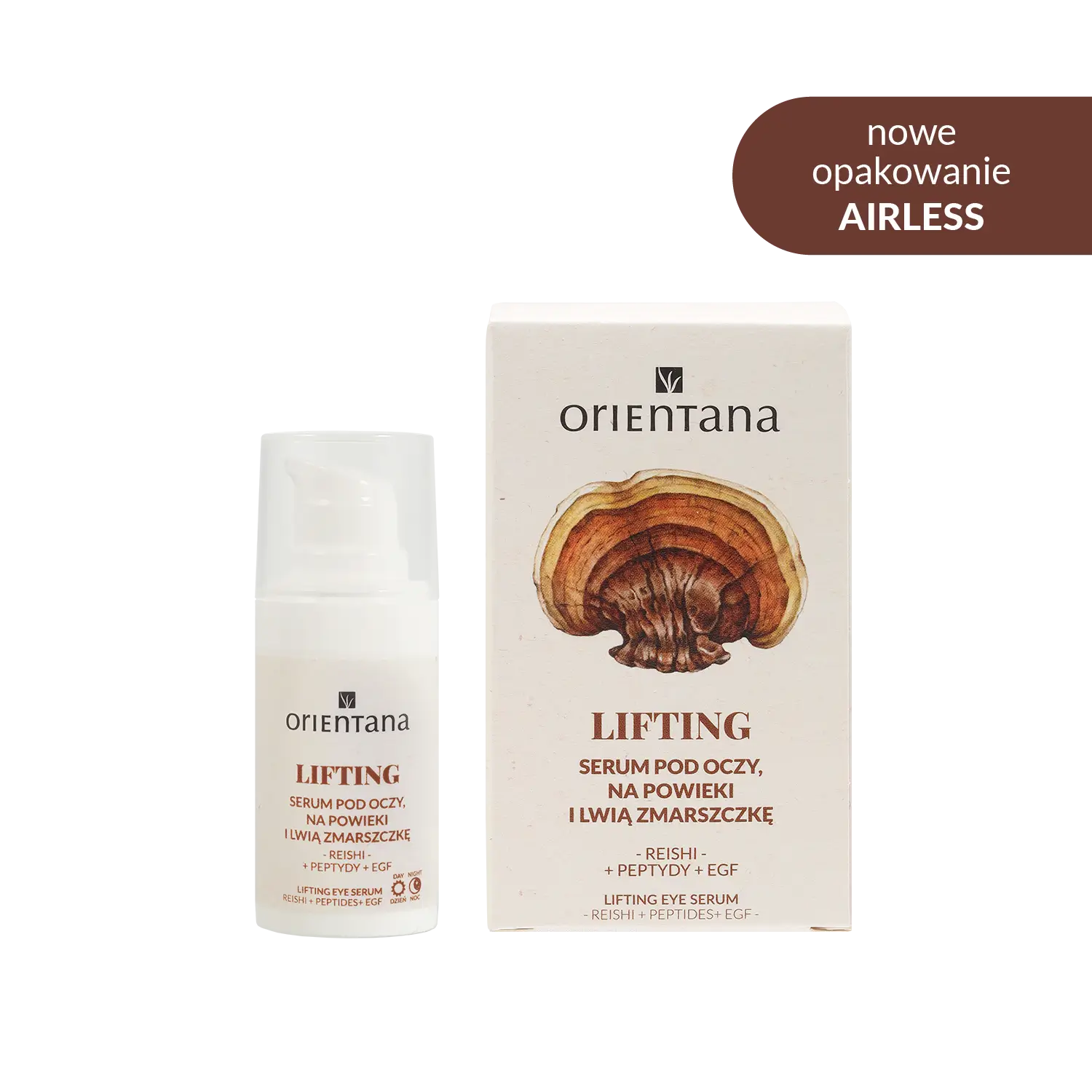
• Available as day cream and eye cream, among others.
These are just a few of the non-comedogenic creams in our offer. Check here and decide which cream meets your needs.
How to use non-comedogenic cream in your skincare routine
Morning:
1. Cleansing (gentle gel, e.g., Date + Inulin).
2. Toning (e.g., toner-essence with gluconolactone).
3. Regulating serum (e.g., Ashwagandha + CICA + Niacinamide).
4. Non-comedogenic cream (HydroTremella / Reishi / snail slime).
5. SPF 50 protection.
Evening:
1. Double cleansing (oil + gel).
2. Regenerating serum.
3. Non-comedogenic cream tailored to skin needs.
Your questions
What does it mean for a cream to be non-comedogenic?
It means it does not clog pores and does not promote the formation of blackheads.
Is a non-comedogenic cream always light?
Usually yes, but light does not mean "weak" – it can be intensely moisturizing.
Is HydroTremella cream suitable for oily skin?
Yes – it was developed to regulate sebum and balance combination skin.
Is snail slime cream suitable for acne-prone skin?
Yes – it supports the healing of inflammation, scars, and does not clog pores.
Is Reishi cream suitable for mature skin?
Yes – it has antioxidant properties and strengthens the skin, while being light and non-comedogenic.
Does non-comedogenic mean hypoallergenic?
No – these are two different concepts. Hypoallergenic = reduced risk of allergies, non-comedogenic = no risk of clogging pores.
What ingredients can cause comedogenicity?
Heavy mineral oils, paraffin, some waxes and plant butters in high concentrations.
Can non-comedogenic cream be used in winter?
Yes – it can be enriched with a serum or an additional protective layer.
Is non-comedogenic cream sufficient as the only face cream?
Yes, if it is well-suited to the skin's needs.
Is HydroTremella cream suitable for use under makeup?
Yes – it absorbs quickly, mattifies, and does not pill under foundation.
Can snail slime cream be combined with retinol?
Yes – it has regenerating and soothing properties, thus supporting the skin during treatment.
Can Reishi creams be used morning and evening?
Yes, depending on your needs, you have a choice of day and night cream.
Are natural creams always non-comedogenic?
No – it depends on the composition and concentrations of oils.
Does non-comedogenic cream work on wrinkles?
It can have anti-aging effects if it contains active ingredients, e.g., adaptogens or Tremella.
How quickly will I see improvement after using a non-comedogenic cream?
Usually after 2-4 weeks of regular use.
Can HydroTremella cream be used on sensitive skin?
Yes – it does not contain irritating ingredients, and Tremella has soothing properties.
Are Reishi creams good for couperose skin?
Yes – they have antioxidant properties and strengthen the barrier.
Can non-comedogenic cream dry out the skin?
No, if it contains humectants and emollients in the right proportion.
Does snail slime cream really absorb quickly?
Yes – it has a light, gel-cream consistency that leaves no greasy film.
Is non-comedogenic cream suitable for men?
Yes – especially HydroTremella and Reishi, as they are light and quickly absorbed.
Can non-comedogenic cream be combined with an oil serum?
Yes, provided the oil is chosen for the skin type and used in a small amount.
Are Orientana creams vegan?
Most are – the exception is the snail slime cream, which is not vegan but ethically sourced (without harm to animals).
Non-comedogenic cream is a cosmetic that should be part of every conscious skincare routine – not only for acne-prone skin but also for combination, mature, or sensitive skin. Thanks to it, you can avoid the problem of clogged pores, while enjoying hydrated and healthy skin.
Among Orientana's proposals, the following stand out:
• HydroTremella sebum-regulating – for oily and combination skin,
• Snail Slime Cream – for acne-prone skin, regeneration, and scars,
• Reishi Creams – for skin requiring antioxidation and barrier strengthening.
These are three different approaches to non-comedogenic care, united by one thing: lightness, effectiveness, and natural ingredients.
Read also: