I remember the moment I started looking at hair differently.
Not as a "dead structure" that just needs to be moisturized or nourished.
But as a material that reacts to the environment – exactly like skin reacts.
Because the truth is:
most hair problems – frizz, dullness, roughness – don't result from a lack of nutrients.
They stem from a disturbed hair surface structure.
And this is where something that is definitely talked about too little in hair care comes in:
hair pH and the role of acids.
In this article, I will show you why tartaric acid is one of the most underrated ingredients in hair length care – and how to use it so that your hair genuinely starts to look healthy.
What is tartaric acid and why does it work on hair?
Tartaric acid is an AHA (alpha-hydroxy acid) and naturally occurs in grapes, among other things.
In cosmetics, it is mainly associated with skin – as an exfoliating and pH-regulating ingredient.
But its role in hair care is completely different – and much more subtle.
On hair, it's not about exfoliation.
It's about physics.
More precisely, it's about how tartaric acid affects:
- the structure of hair cuticles
- the pH level on its surface
- its light reflection ability
And it is these three elements that determine whether hair is:
- smooth or rough
- shiny or dull
- disciplined or frizzy
How does tartaric acid work on hair?
1. Closing hair cuticles - the key to smoothness
Each hair is covered with microscopic cuticles – like roof tiles.
When they are:
- open → hair is rough and dull
- closed → hair is smooth and shiny
And here comes the most important role of tartaric acid:
👉 it lowers the pH of the hair surface
And lower pH causes the cuticles to:
- lie flat
- smooth out
- form a uniform surface
The result?
Hair:
- tangles less
- frizzes less
- reflects light better
This is not a "cosmetic" effect.
This is a physical effect.
2. Smoothing without weighing down
Most smoothing products work by:
- coating the hair (e.g., silicones)
- adding weight (oils, butters)
Tartaric acid works differently.
It doesn't coat the hair.
It doesn't weigh it down.
👉 It restores the proper structure of its surface.
That's why the effect is:
- light
- natural
- long-lasting
It can be compared to "soft hair lamination," but without a heavy film.
3. Frizz reduction (anti-frizz effect)
Frizzy hair is often not a lack of care.
It's the result of:
- open cuticles
- uneven structure
- absorbing moisture from the air
Tartaric acid reduces this problem because it:
- smooths the hair surface
- reduces its "functional porosity"
- stabilizes the structure
Result:
👉 hair stops reacting so intensely to moisture
4. Restoring shine
Hair shine does not come from "oiling".
It comes from how light reflects off its surface.
Smooth hair = mirror
Rough hair = light scattering
Tartaric acid:
- evens the surface
- increases light reflection
👉 that's why hair looks healthier, even if its structure isn't perfect
5. Support for damaged and high-porosity hair
You'll notice the biggest difference with hair that is:
- colored
- lightened
- heat-styled
- high-porosity
Why?
Because these hairs have:
- the most open cuticles
- the most unstable structure
Tartaric acid helps them to:
- "get back in shape"
- regain control over their surface

Tartaric acid vs other smoothing ingredients
This is important from an SEO and educational perspective.
Silicones
- give an immediate effect
- but work superficially
Oils
- nourish
- but do not regulate pH
Proteins
- rebuild
- but can increase roughness with overuse
👉 tartaric acid does something they don't:
it regulates hair structure through pH
That's why it works differently – and often better as an element of balance.
Check out our natural hair cosmetics.
What hair types will benefit most from tartaric acid?
Hair will benefit most if it is:
- frizzy
- high-porosity
- dull
- rough
- difficult to detangle
- "puffy" despite care
If you feel that:
"I'm doing everything right, and my hair still doesn't look good"
👉 that's often a problem of structure, not ingredients
How to use tartaric acid on hair?
Key rule:
👉 apply only to lengths, NOT to the scalp
Application scheme
- On damp or dry hair
- From mid-lengths to ends
- Leave-in (if it's a serum)
When to use?
- after washing
- before styling
- as a dry smoothing treatment
How often?
- even daily (if the formula is gentle)
Tartaric acid in practice - how to incorporate it into your hair care?
Modern hair care is moving away from heavy, one-dimensional products.
Formulas are increasingly being used that:
- act at the level of the hair structure
- do not weigh down
- provide both visual and functional benefits
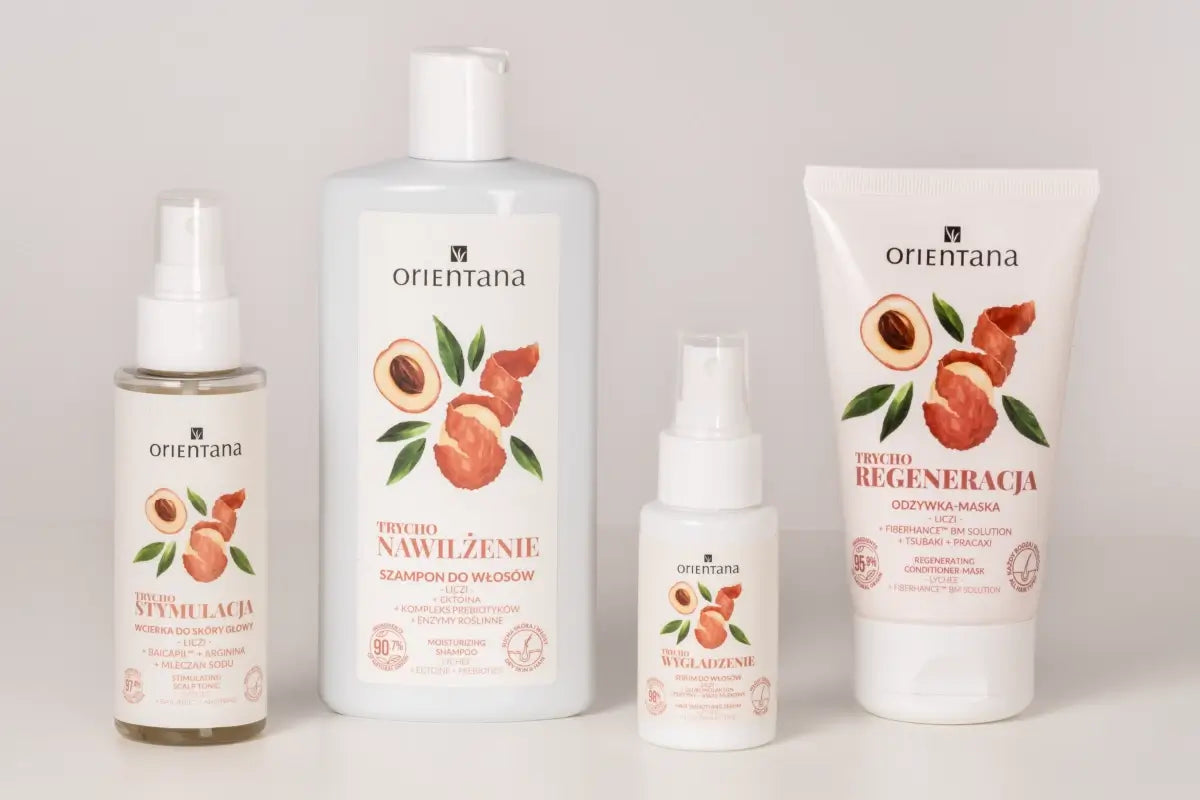
One such solution is a light hair serum that uses the action of acids to smooth and restore balance.

This approach differs from classic hair care.
Instead of "adding more layers," we work to ensure that hair functions correctly on its own.
that hair functions correctly on its own.
What results can you expect?
Immediately:
- smoothness
- softness
- shine
After a few weeks:
- less frizz
- better hair manageability
- a more "disciplined" appearance
Common mistakes
- applying to the scalp ❌
- combining with very alkaline products
- lack of PEH balance
- expecting an "oily" effect
Summary
Not everything that smooths hair has to weigh it down.
Sometimes the problem isn't that hair is lacking something.
But that its structure is out of balance.
👉 Tartaric acid doesn't "add" care.
It restores the conditions in which hair can look good.
And that's a completely different level of conscious hair care.
FAQ
Does tartaric acid straighten hair?
It doesn't straighten hair, but it smooths its surface, which can give the effect of more disciplined strands.
Does tartaric acid work like hair lamination?
It has a similar visual effect (smoothness, shine), but without weighing down and without creating a heavy layer.
Can tartaric acid be used daily?
Yes, if it's in a light formula (e.g., a serum) and applied to the lengths of the hair.
Does tartaric acid weigh down hair?
No – that's one of its biggest advantages.
Is tartaric acid suitable for curly hair?
Yes, especially for frizz reduction and improved curl definition.
Does tartaric acid dry out hair?
No – it works by regulating pH, not by degreasing.
Can tartaric acid be combined with oils?
Yes – it's a very good combination: structure + nourishment.
Does tartaric acid work on split ends?
It doesn't seal them, but it improves their appearance and reduces roughness.
Is tartaric acid safe for colored hair?
Yes – it can even improve their appearance and shine.
Does tartaric acid work from the first use?
Yes, the smoothing and brightening effect is visible immediately.
Read also How fast does hair grow? A trichologist's perspective