
There comes a moment when skin begins to behave differently. The cream that worked for years is no longer sufficient. Dryness appears, a feeling of tightness, fine lines deepen faster, and the skin becomes thinner and more reactive.
Many women describe it very similarly:
"I'm doing everything as before, but my skin has suddenly stopped cooperating."
This is no coincidence. This is very often perimenopause – the transitional stage before menopause, which can begin several years earlier than most people expect.
From a cosmetology perspective, this is one of the most important moments in skin care. Not because the skin "is aging," but because its biology is changing.
In this article, I will show you:
- what exactly happens to the skin during perimenopause
- why your current skincare routine stops working
- which ingredients are truly effective (and which are overrated)
- how to build a routine that restores skin comfort, density, and elasticity
No myths, no marketing, just practical advice and skin physiology.
What is perimenopause and how does it affect the skin?
Perimenopause is a transitional period before menopause, which can last from several to over a dozen years. During this time, hormone levels—primarily estrogen—begin to fluctuate and then gradually decline.
And it is precisely estrogens that have a huge impact on the condition of the skin.
Estrogen decline and skin condition
Estrogens are responsible for many processes that directly affect skin appearance:
- stimulate collagen and elastin production
- support skin hydration
- regulate sebum production
- strengthen the hydrolipid barrier
When their level starts to drop:
- collagen levels decrease (by as much as ~1–2% annually)
- skin loses elasticity and density
- greater dryness appears
- the protective barrier weakens
The result? Skin becomes thinner, more prone to damage, and reacts more quickly to external factors.
Why does skin suddenly become "different"?
This is one of the most common questions.
The change is not just about "less hydration." During perimenopause, several processes occur simultaneously:
- slower cell renewal
- changes in skin lipid composition
- disruptions in the skin microbiome
- increased sensitivity to oxidative stress
Therefore, skin can simultaneously be:
- dry, but with imperfections
- thin, but tight
- reactive, though it was previously resilient
This is a new skin type and requires a new approach.

Skin symptoms of perimenopause
The most commonly observed changes are:
1. Dryness and dehydration
Skin loses water faster, and classic "moisturizing" creams are no longer enough.
2. Loss of firmness
Decreased collagen production causes the skin to become less elastic.
3. Thin, "papery" texture
Especially visible under the eyes and on the cheeks.
4. Increased reactivity
Skin reddens easily, stings, and reacts to cosmetics.
5. Hormonal discoloration
Uneven skin tone, pigment spots.
6. Adult acne
Paradoxically – despite dryness.
How does skin look in perimenopause - key problems
From an SEO and skincare practice perspective, it’s worth breaking this down into specific problems, because that’s exactly how users search.
Dryness and dehydration of the skin
This is one of the first signs.
It's not just about a lack of water, but about:
- weakening of the hydrolipid barrier
- decreased lipid production
- increased water loss (TEWL)
Result: skin "drinks the cream" and is still dry.
Check what the hydrolipid barrier is and which cosmetics strengthen it.
Wrinkles and loss of elasticity
The decline in estrogen directly affects fibroblasts - cells that produce collagen.
This causes:
- faster deepening of wrinkles
- loss of tension
- "sagging" of facial contours
Hormonal hyperpigmentation
Hormonal changes affect melanocytes, the cells that produce pigment.
Effect:
- melasma
- pigment spots
- uneven skin tone
Capillaries and hypersensitivity
Thinner skin = more visible blood vessels.
Often appears:
- erythema
- stinging
- reactions to cosmetics
Adult acne
This is surprising, but common.
Reasons:
- hormonal imbalances
- oxidative stress
- changes in the microbiome
Why does standard skincare stop working?
This is a key moment from the user's perspective.
The most common problem isn't that cosmetics are "bad."
The problem is that they are suited to skin from a few years ago
In perimenopause, what changes is:
- lipid requirement
- tolerance to active ingredients
- regenerative capacity
Therefore:
- light creams are no longer sufficient
- strong ingredients start to irritate
- "old skincare habits" stop working
This is the moment when skincare needs to be rebuilt – not intensified.
Ayurvedic creams – Balance and Nourishment – are a good solution.
Skincare in perimenopause - pillars of an effective routine
If I were to simplify it into one sentence:
skin in perimenopause needs less aggression and more support.
This is a moment when the "the more active ingredients, the better" approach stops working. Instead, four pillars are crucial:
Rebuilding the hydrolipid barrier - an absolute essential
This is the most important point, determining everything: hydration, reactivity, and even the effectiveness of other ingredients.
During perimenopause:
- the amount of lipids in the skin decreases
- TEWL (water loss) increases
- the protective barrier becomes "leaky"
What works best:
- ceramides
- squalane
- plant oils rich in EFAs (Essential Fatty Acids)
- plant butters (e.g., shea)
If the barrier is not rebuilt, even the best serum will not work as it should.
Intense hydration - but intelligently structured
Many people make a mistake here: they use only humectants (e.g., hyaluronic acid), without protecting them with lipids.
Result:
temporary hydration → rapid water loss → even greater dryness
Therefore, a combination is needed:
- humectants (water binding):
- hyaluronic acid
- glycerin
- gluconolactone
- emollients (water sealing):
- oils
- ceramides
- squalane
This is true hydration for perimenopausal skin.
Collagen stimulation without irritation
Classic retinoids can be too aggressive at this stage.
Therefore, increasingly important are:
- phytoretinol
- biotechnological equivalents of retinol (e.g., NovoRetin™)
- peptides
They act slower, but:
- are better tolerated
- do not disrupt the barrier
- can be used daily
This is a key change in approach: less "shock for the skin," more long-term stimulation.
Check out Bioretinol - the biotechnological future of anti-aging
Antioxidation - protection against accelerated aging
During perimenopause, oxidative stress increases, which:
- damages collagen
- accelerates aging
- impairs regeneration
Therefore, the skin needs strong antioxidant support:
- vitamin C
- adaptogens (e.g., reishi, ashwagandha)
- plant polyphenols
This is not an "addition" - it's one of the pillars of skincare.
If you want to learn about oxidative stress, read the post Oxidative stress – what it is, how it affects our skin and body?
Best active ingredients in perimenopausal skin care
This section ranks very well in Google, so it's worth treating it as a mini knowledge base.
Ceramides - rebuilding skin structure
Ceramides are a natural component of the hydrolipid barrier.
Their action:
- reduce water loss
- strengthen skin structure
- improve comfort and elasticity
This is an absolute must-have.
Orientana cosmetics with ceramides and bioceramides.
Peptides - communication with skin cells
Peptides act as "signals" for the skin:
- stimulate collagen production
- improve firmness
- support regeneration
They are ideal for perimenopause because:
- they do not irritate
- they have long-term effects

Niacinamide - a versatile ingredient
This is one of the most universal ingredients:
- strengthens the barrier
- reduces discoloration
- regulates sebum
- has anti-inflammatory properties
excellent for simultaneous dryness and imperfections
Adaptogens - a new direction in cosmetology
Adaptogens act at a cellular level, helping the skin cope with stress.
Key actions:
- protection against oxidative stress
- improved regeneration
- support for the microbiome
Most commonly used:
- reishi
- ashwagandha
- ginseng
Very consistent with skincare during hormonal changes.

Phytoestrogens – plant support for the skin
These are plant ingredients that exhibit estrogen-like effects.
Their potential:
- improved elasticity
- support for skin density
- anti-aging effects

PHAs (e.g., gluconolactone) - gentle exfoliation
Instead of strong AHAs, PHAs work better:
- act gently
- do not irritate
- moisturize at the same time
ideal for sensitive and thin skin
Caffeine - microcirculation and eye area
- reduces puffiness
- improves microcirculation
- brightens dark circles
especially important under the eyes

What to avoid in perimenopausal skin care
This section often makes the biggest difference.
Too aggressive acids
High concentrations of AHAs can:
- damage the barrier
- increase sensitivity
- worsen dryness
Strong retinoids without barrier support
Result:
- irritation
- flaking
- worsening skin condition
Excessive cleansing
Too frequent or too harsh cleansing:
- removes lipids
- increases dryness
Cosmetics with a lot of alcohol
- dry out
- destabilize the barrier
Step-by-step skincare routine (morning and evening)
This is one of the most important sections for SEO and the user.
Morning routine
-
Gentle cleansing
– without disrupting the barrier -
Toning / essence
– hydration + skin preparation -
Antioxidant serum
– vitamin C / adaptogens -
Barrier-restoring cream
– ceramides + lipids -
SPF
– an absolute essential
Evening routine
- Thorough but gentle cleansing
-
Regenerating serum
– peptides / phytoretinol -
Richer nourishing cream
– lipids + restoring ingredients
Under-eye skin in perimenopause - the most demanding area
The eye area is very often the first to show changes related to perimenopause.
Why?
- the skin here is even 3–5 times thinner than on the rest of the face
- it has fewer sebaceous glands
- loses collagen faster
- retains water less effectively
Result:
- "parchment-like" texture
- fine but visible wrinkles
- dark circles and puffiness
- feeling of tightness
How to care for under-eye skin in perimenopause?
Minimalism doesn't work here. But neither does aggression.
A multi-directional approach works best:
- hydration (humectants + lipids)
- collagen stimulation (peptides, phytoretinol)
- microcirculation (caffeine)
- barrier protection
Key: regularity + gentle application (without stretching the skin)
What ingredients to look for in an eye cream?
- caffeine – reduces swelling
- peptides – improves firmness
- plant-based retinol alternatives – smoothing
- oils and butters – comfort and nourishment
- antioxidants – protection
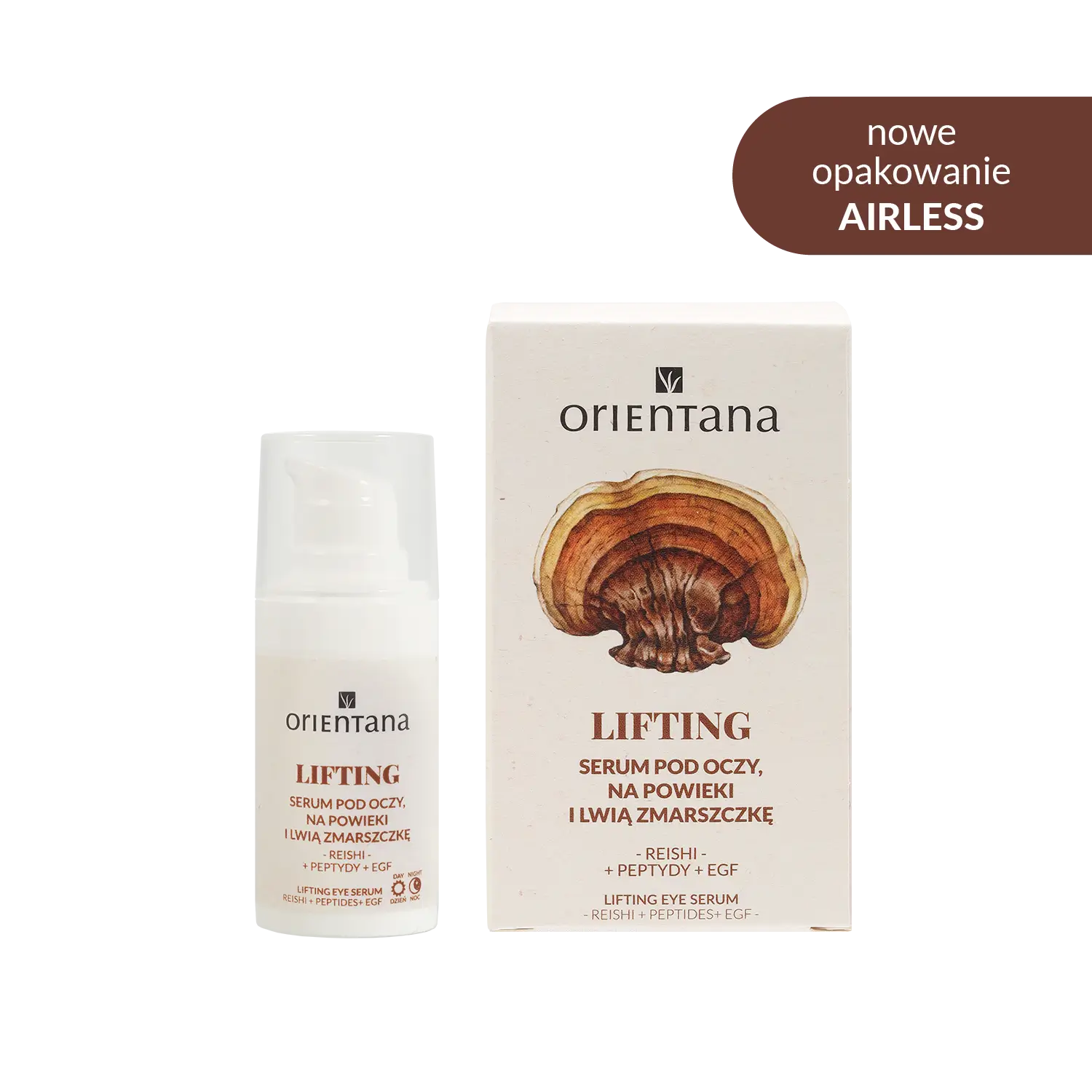
This is exactly where a well-designed eye cream makes a huge difference—because this skin reacts faster than the rest of the face.
Perimenopausal skin care and lifestyle
What happens to the skin is not just the result of skincare.
It's a reflection of processes occurring in the body.
Diet
Skin during this period particularly needs:
- protein (collagen building block)
- antioxidants
- healthy fats
deficiencies very quickly affect the skin's condition
Sleep
Regeneration occurs at night.
Lack of sleep:
- increases oxidative stress
- worsens microcirculation
- intensifies signs of fatigue
Stress
High cortisol levels:
- weakens the skin barrier
- accelerates aging
- worsens regeneration
that's why adaptogens make sense not only in cosmetics but also in lifestyle
Physical activity
- improves circulation
- oxygenates the skin
- supports cellular metabolism
Most common mistakes in perimenopausal skin care
This is where many people... make things worse by trying to improve them.
"I'm doing the same thing I did 10 years ago"
Skin has changed – skincare must too.
Too many active ingredients at once
Result:
- irritation
- barrier destabilization
- skincare chaos
Ignoring the hydrolipid barrier
This is the most common mistake.
Without a barrier:
no skincare works optimally
Too aggressive an approach to anti-aging
Strong action ≠ effective action
In perimenopause, what wins is:
consistency and regeneration
Can skin aging be stopped in perimenopause?
No.
But something more important can be done:
slow down the process and improve skin quality
Real effects of well-chosen skincare:
- better hydration
- greater elasticity
- smoothing
- healthier skin appearance
This is not turning back time.
This is restoring balance.
Perimenopausal skin care - summary
Key principles:
- rebuild the hydrolipid barrier
- layer skin hydration
- choose gentle but effective stimulation
- introduce antioxidants
- limit aggressive ingredients
- be consistent
And most importantly:
👉 Your skin is not "breaking down" - it's changing
👉 and well-chosen skincare can significantly improve this change
EXPERT COMMENTARY
Cosmetological practice shows that the greatest improvement in skin condition during perimenopause comes not from the "strongest cosmetic" but from the best-matched skincare strategy.
This is a moment when:
- less is more
- regeneration triumphs over aggression
- and conscious skincare delivers real, visible results
FAQ
What happens to skin in perimenopause?
Estrogen levels drop, leading to collagen loss, dryness, and increased skin sensitivity.
How to care for skin in perimenopause?
Key is rebuilding the hydrolipid barrier, intense hydration, and using gentle collagen-stimulating ingredients.
What cosmetics to use in perimenopause?
Cosmetics with ceramides, peptides, adaptogens, and antioxidants work best.
Is retinol good in perimenopause?
It can be effective, but its milder, plant-based or biotechnological counterparts are often better tolerated.
Why does skin become dry?
Sebum production and the skin's ability to retain water decrease.
Can skin firmness be improved?
Yes, by regularly using peptides, antioxidants, and ingredients that support collagen production.
How to care for under-eye skin?
Use creams with caffeine, peptides, and moisturizing ingredients that improve microcirculation and elasticity.
Do adaptogens work on skin?
Yes, they support the skin's resistance to oxidative stress and improve its regeneration.
Which acids are safe?
Gentle PHAs, such as gluconolactone, work best.
Does diet affect skin?
Yes, protein and antioxidant deficiencies very quickly worsen skin condition.
What is perimenopause?
It is the transitional period before menopause, during which hormone levels – mainly estrogens – begin to fluctuate and gradually decline.
How does perimenopause affect the skin?
It leads to collagen loss, increased dryness, loss of elasticity, and increased skin sensitivity.
When does perimenopause begin?
Most often between the ages of forty and fifty, although the first symptoms may appear earlier.
Why does skin suddenly become dry?
Sebum production and the skin's ability to retain water decrease, leading to dehydration.
What are the first skin symptoms of perimenopause?
Dryness, thin skin texture, fine wrinkles, hypersensitivity, and uneven skin tone.
Can skin be both dry and acne-prone at the same time?
Yes, this is a common phenomenon resulting from hormonal changes and disturbances in the skin's microbiome.
How to care for skin in perimenopause?
The most important thing is to rebuild the hydrolipid barrier, provide intense hydration, and use gentle active ingredients.
What ingredients are most important?
Ceramides, peptides, niacinamide, antioxidants, and adaptogens.
Is hyaluronic acid enough?
No, it should be combined with lipids that prevent water loss.
What best rebuilds the skin barrier?
Ceramides, squalane, and plant-derived fatty acids.
Is retinol safe in perimenopause?
It can be effective, but its milder counterparts are often better tolerated.
What instead of retinol?
Phytoretinol, peptides, and biotechnological alternatives to retinol.
Does skin become thinner?
Yes, a drop in estrogen leads to a decrease in skin density.
Why do wrinkles appear?
The production of collagen and elastin decreases, which affects the skin's structure.
Can collagen be rebuilt?
Its production can be stimulated, but it is not possible to fully restore previous levels.
How to improve skin firmness?
Regular use of peptides, antioxidants, and regenerating ingredients improves elasticity.
Are discolorations more common?
Yes, hormonal changes can intensify melanin production.
How to reduce discolorations?
Through regular care, the use of antioxidants, and daily sun protection.
Is SPF necessary?
Yes, daily sun protection is the basis of skincare.
Which acids are safe?
Gentle PHA acids, such as gluconolactone, work best.
Can AHA acids be used?
Yes, but in low concentrations and in moderation.
Does the skin become more sensitive?
Yes, because the protective barrier is weakened.
How to reduce skin sensitivity?
By rebuilding the hydrolipid barrier and limiting irritating ingredients.
Do adaptogens work on the skin?
Yes, they help the skin cope better with oxidative stress.
Which adaptogens are most commonly used?
Reishi, ashwagandha, and ginseng.
Does diet affect the skin?
Yes, nutrient deficiencies quickly worsen its condition.
Which vitamins are important for the skin?
Especially vitamin C, E, and B vitamins.
Does stress affect the skin?
Yes, it increases inflammation and accelerates aging processes.
Is sleep important for the skin?
Yes, key regenerative processes occur during sleep.
Does physical activity improve skin appearance?
Yes, it improves circulation and tissue oxygenation.
How to care for the skin under the eyes?
Use creams with caffeine, peptides, and moisturizing ingredients.
Why do dark circles appear under the eyes?
Due to impaired microcirculation and thinner skin.
What helps with puffiness under the eyes?
Caffeine and improved lymphatic circulation.
Can skin aging be stopped?
No, but it can be significantly slowed down.
Can cosmetics replace hormones?
No, but they can support the skin in adapting to changes.
How often should skincare be changed?
With changing skin needs, not under the influence of trends.
Does minimalism in skincare work?
Yes, if cosmetics are well-chosen for the current needs of the skin.
Does a greater number of cosmetics provide better results?
No, excess can lead to irritation and barrier dysfunction.
What is the most common skincare mistake?
Neglecting to rebuild the hydrolipid barrier.
What is most important in perimenopausal skin care?
Regularity, gentleness, and tailoring care to changing skin.