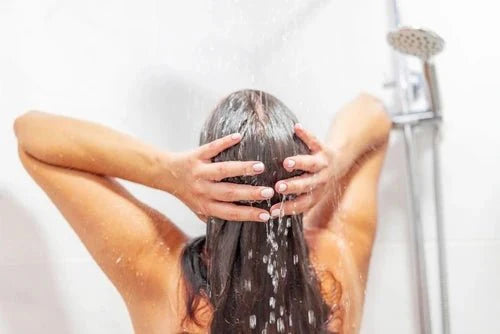
Sodium Laureth Sulfate (SLS) is one of the most commonly used ingredients in shampoos and body wash products. Its main function is to remove dirt, grease, and impurities, as well as to create abundant foam, which makes the cosmetic appear more effective in cleansing.
However, many controversies have arisen around SLS. Critics point to its potential irritating and drying effects, as well as its ability to weaken the scalp's hydrolipid barrier. More and more people are looking for gentler alternatives that will maintain healthy skin and hair without the risk of irritation. In this article, we will discuss the impact of SLS on hair and present effective substitutes.
What is Sodium Laureth Sulfate (SLS)?
Chemical structure and properties
Sodium Laureth Sulfate (SLS) is an anionic surfactant belonging to the group of ethoxylated sulfates. It is a synthetic detergent derived from lauryl alcohol, which undergoes an ethoxylation process that reduces its aggressiveness compared to Sodium Lauryl Sulfate (SLS).
SLS works by lowering the surface tension of water, which allows for effective emulsification of fats and impurities, and then their rinsing from hair and scalp.
Why is SLS widely used?
Sodium Lauryl Sulfate (SLS) is a highly effective detergent that quickly removes sebum and all impurities from the skin and hair surface. Thanks to its cleansing properties, it effectively dissolves fats and dirt, which makes it widely used in shampoos, shower gels, and other hygiene products.
One of the characteristic features of SLS is its ability to foam intensely. Abundant foam not only facilitates product application and distribution but is also welcomed by consumers, who often equate it with better cleaning effectiveness. Thanks to this, products containing SLS are popular in the cosmetic market.
Another advantage of SLS is its low production cost. It is one of the cheapest and most readily available detergents, which makes it an attractive ingredient for cosmetic and cleaning product manufacturers. Its use can reduce production costs while ensuring high cleaning effectiveness.
This substance also gives a distinct feeling of cleanliness after washing hair or skin. Users often feel that their hair is light, fresh, and free of excess sebum. However, intense degreasing action can lead to dry skin and hair, which in some people causes irritation or excessive sebum secretion as a defensive reaction of the body.
Is SLS harmful?
Irritating and drying effects
Sodium Lauryl Sulfate (SLS) is an effective detergent, but its action can be too aggressive for some skin types. Although it perfectly removes impurities and sebum, its intense cleansing properties can lead to negative side effects, especially in people with sensitive skin.
Dermatological studies have shown that SLS can weaken the skin's natural protective barrier. As a result, this can lead to scalp irritations, manifested by itching, burning, and redness. Long-term use of products containing SLS can exacerbate these symptoms, causing discomfort and increased skin sensitivity.
Another problem resulting from the action of SLS is skin dryness. This detergent removes not only excess sebum but also the natural hydrolipid layer, which is responsible for hydration and protection against external factors. Disrupting this barrier can result in a feeling of tightness, dryness, and skin flaking.
Paradoxically, excessive sebum removal by SLS can lead to increased sebum production. The skin, defending itself against dryness, begins to secrete more oil, which can lead to rapid hair greasing and the need for more frequent washing. This vicious cycle can exacerbate scalp problems, especially in people prone to seborrhea.
Allergic reactions and hypersensitivity
SLS can cause allergic reactions, especially in people with sensitive skin or a tendency to atopic dermatitis. In people suffering from psoriasis, eczema, or skin acne, it can worsen symptoms.
Does SLS contribute to hair loss?
Many consumers worry that Sodium Lauryl Sulfate (SLS) can cause excessive hair loss. While there is no direct scientific evidence that SLS itself leads to permanent hair loss, its action can indirectly affect scalp condition and weaken hair follicles.
SLS is a strong detergent that removes oil and impurities, but it can also disrupt the natural hydrolipid barrier of the skin. Studies show that long-term exposure to SLS can lead to irritation, dryness, and inflammation of the scalp. One study published in the International Journal of Trichology noted that chronic scalp irritation can weaken hair follicles and cause increased breakage and thinning.
Additionally, people with sensitive scalps or predispositions to conditions such as seborrheic dermatitis or atopic dermatitis may react more intensely to SLS. Itching, redness, and scalp inflammation can lead to increased scratching, which in turn damages hair follicles and accelerates the hair loss process.
Another mechanism that can indirectly affect hair condition is excessive degreasing of the scalp. SLS removes sebum, which plays an important role in protecting hair and skin. In response, the body may increase oil production, leading to a vicious cycle of greasy hair and more frequent washing. Too frequent use of strong detergents can weaken the hair structure, and even lead to breakage and thinning.
Some laboratory studies on animals have shown that high concentrations of SLS can cause skin cell damage and weaken hair follicles, but the doses used in tests significantly exceeded those found in cosmetics. It is worth emphasizing that SLS is approved for use in hair care products at safe concentrations, usually not exceeding 15-30% in the cosmetic composition.
In summary, SLS is not a direct cause of hair loss, but its potential irritating and drying effects can lead to weakening of the scalp and hair structure, which can indirectly contribute to hair loss. People with sensitive scalps or a tendency to irritation should consider gentler alternatives, such as Sodium Cocoyl Isethionate (SCI) or Sodium Lauroyl Methyl Isethionate (SLMI), which are milder for the skin and hair.
Alternatives to SLS – gentle cleansing agents
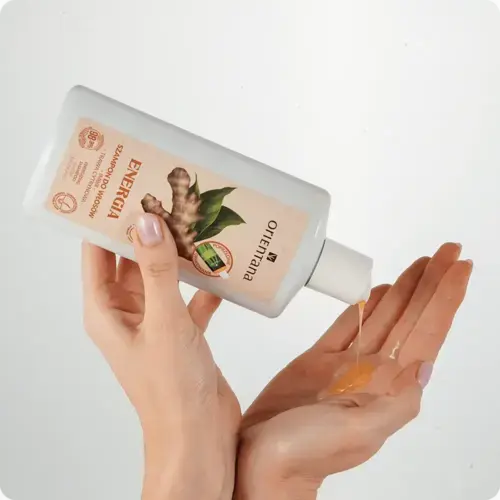
Although Sodium Lauryl Sulfate (SLS) is an effective detergent, its strong action can be too aggressive for sensitive skin and hair. There are many gentler cleansing substances on the market that effectively cleanse while minimizing the risk of irritation and dryness. Alternatives to SLS can be divided into several groups, depending on their chemical properties and origin.
Gentle anionic substances
Anionic agents are a group of detergents with good cleansing properties, but among them, gentler alternatives to SLS can be found.
Sodium Coco-Sulfate (SCS) is a milder version of SLS, derived from coconut oil. Although it still has foaming and cleansing properties, its molecules are larger, making it less aggressive on skin and hair. Studies have shown that SCS poses a lower risk of irritation compared to classic SLS, which makes it more frequently used in natural shampoos and products for sensitive skin.
Sodium Lauryl Sulfoacetate (SLSA) is another alternative with foaming properties. Unlike SLS, it does not cause such strong dryness because its molecules do not penetrate as deeply into the lipid layer of the skin. It is well tolerated by most skin types and is often used in natural cosmetics and children's products.
Amphoteric cleansing agents
Amphoteric agents are milder detergents that are often used in combination with anionic cleansing substances to reduce their irritating effect.
Cocamidopropyl Betaine is one of the most commonly used ingredients in cosmetics for children and people with sensitive skin. It softens the effect of stronger detergents and improves foam quality, making products containing SLS less aggressive on the skin. Studies indicate that Cocamidopropyl Betaine reduces the irritating potential of anionic surfactants by as much as 30-40%, making it a valuable ingredient in gentle formulations.
Coco Betaine is a more natural version of cocamidopropyl betaine, which has similar properties but is even milder. It is used in ecological cosmetics and products intended for allergic skin.
Non-ionic surfactants
Non-ionic detergents are among the mildest cleansing substances, making them an ideal choice for people with irritation-prone skin.
Decyl Glucoside is a mild, biodegradable surfactant derived from sugars and vegetable oils. It is characterized by low irritating potential, which is why it is eagerly used in ecological products and cosmetics for infants. According to dermatological studies, Decyl Glucoside is one of the best-tolerated detergents on the cosmetic market.
Lauryl Glucoside is another non-ionic detergent that is gentler than SLS but still effectively cleanses skin and hair. It is often used in children's shampoos and products for atopic skin. Research shows that Lauryl Glucoside does not disturb the skin's hydrolipid barrier, thus helping to maintain proper hydration levels.
Natural detergent substitutes
For those looking for completely natural solutions, there are alternatives based on plant and mineral ingredients that effectively cleanse skin and hair without the use of synthetic detergents.
Washing nut powder (Reetha) and Shikakai are traditional ingredients used in hair care in India. Reetha nuts contain natural saponins, which act as a mild detergent, cleansing the scalp and hair without excessive degreasing. Shikakai, in turn, has moisturizing and strengthening properties, which makes it valued in Ayurvedic hair care methods.
Cleansing clays, such as Moroccan clay (ghassoul), are another natural alternative to detergents. This clay effectively absorbs excess sebum and impurities without disturbing the skin's protective barrier. It is especially recommended for people with oily hair problems and a tendency to irritation.
Alternatives to SLS include a wide range of gentler detergents that effectively cleanse hair and skin, minimizing the risk of irritation. People with sensitive skin or dermatological problems can opt for milder anionic, amphoteric, and non-ionic substances, as well as natural cleansing ingredients that have been used in hair care for centuries. The choice of the appropriate agent depends on individual needs, but more and more people are consciously abandoning aggressive detergents in favor of milder and more skin-friendly alternatives.
How to switch to SLS-free care?
Changing your hair care routine to one that does not contain Sodium Lauryl Sulfate (SLS) can bring many benefits, especially for people with sensitive skin, prone to irritation or excessive oiliness. However, completely giving up SLS requires a thoughtful approach, as the scalp and hair may need time to adjust to the new routine.
Gradual introduction of shampoos with a gentle composition
Suddenly discontinuing SLS may cause hair to appear less fresh or become oily faster during the first few weeks. This is due to the fact that the scalp, accustomed to strong degreasing, may initially produce an excessive amount of sebum. Therefore, the best solution is to gradually introduce milder shampoos.
Initially, it is worth using a gentler SLS-free shampoo alternately with your current product, e.g., every other wash. This will allow the scalp to gradually get used to milder detergents. After a few weeks, you can completely switch to gentle cleansing agents, such as Decyl Glucoside, Lauryl Glucoside, or Cocamidopropyl Betaine.
Regular scalp exfoliation to avoid excessive oiliness
One of the challenges that may arise after discontinuing SLS is the feeling of heavy hair or excessive oiliness of the scalp. This is a normal reaction of the body, which tries to restore the natural balance of sebum production.
To prevent this effect, it is worth introducing regular scalp exfoliations. Exfoliations help remove accumulated sebum, dead skin cells, and cosmetic residues, while improving microcirculation and supporting healthy hair growth. You can use:
- Enzymatic exfoliants – containing natural enzymes, e.g., from papaya or pineapple, which gently dissolve impurities without mechanical friction.
- Mechanical exfoliants – containing exfoliating particles, e.g., ground apricot kernels, sea salt, or sugar.
- Clay exfoliants – based on cleansing clays, such as Moroccan clay (ghassoul) or white kaolin clay, which absorb excess sebum and gently refresh the scalp.
It is worth performing scalp exfoliation once every 7-10 days, so as not to dry out the skin, but at the same time prevent excessive hair oiliness.
Testing different formulas to choose the best product for your hair
There is no one-size-fits-all recipe for SLS-free care, as each type of hair and scalp reacts differently to various cleansing ingredients. It is worth testing different formulas and observing how your hair behaves after using them.
What to look for when choosing an SLS-free shampoo?
- Type of cleansing substance – for very sensitive skin, non-ionic detergents (e.g., Decyl Glucoside, Lauryl Glucoside) will work better, while for people with oily scalps, milder anionic agents (e.g., Sodium Coco-Sulfate) may be better.
- Presence of moisturizing ingredients – plant oils, aloe vera, glycerin, or betaine help maintain proper scalp hydration and prevent dryness.
- Balance of cleansing and conditioning ingredients – shampoo should not only effectively clean but also support the condition of the scalp and hair.
It is also worth remembering that hair may need time to adapt to new care. For the first few weeks, it may look different than usual – it may become oily faster, dull, or more limp. This is a natural reaction resulting from the scalp adjusting to gentler cleansing.
Switching to SLS-free care requires patience and observation of skin and hair reactions. The key is to gradually introduce milder shampoos to avoid shocking the scalp. Additionally, regular exfoliations will help maintain the balance of sebum production and prevent hair from becoming weighed down. Testing different formulas will allow you to find the best product tailored to your individual needs. With properly selected care, hair can become healthier, less prone to dryness, and more resistant to damage.
Giving up SLS in daily care can bring benefits in the form of a healthier scalp and less dry hair. Gentler cleansing agents may require an adaptation period, but the long-term effects often compensate for initial difficulties. It is worth experimenting with different alternatives to find the best shampoo for your hair and scalp.