Did you know that "collagen" in cosmetics doesn't have to come from fish skin or scales, and hyaluronic acid has long not been sourced from animals? Modern phytocosmetics less and less rely on a simple scheme: "herbal extract = natural care." Today, plants and fungi are the starting point for something much more precise: biotechnologically designed next-generation ingredients.
This is why we talk about a new era of skincare: nature is still visible on the label, but efficacy is backed by processes such as fermentation, biosynthesis, and enzymatic biocatalysis. Thanks to these, ingredients with a stable structure, predictable action, and excellent tolerance can be created, ones that genuinely address skin needs in anti-aging, barrier care, and "skin longevity" routines.
At Orientana, this direction is particularly evident in the approach to phyto-equivalents of ingredients known from dermatology: phytocollagen, phyto-ceramides, phyto-mucin, phyto-endorphins, and phyto-retinol. These are not "herbal creams" in the old sense. These are phytocosmetics based on modern technologies.
If you want to learn more about the broad context of phyto-ingredients, read here.
Table of Contents
- How do modern phytocosmetics differ from "herbal care"?
- What is biotechnology in phytocosmetics?
- 3 key methods: fermentation, biosynthesis, and enzymatic biocatalysis
- What biotechnology offers: efficacy, safety, repeatability, and sustainability
- The most common "biotech" ingredients in cosmetics and how they work
- How to identify biotechnological ingredients in INCI?
- Case study: phyto-equivalents in Orientana's approach
- Challenges of biotechnology: costs, stability, consumer education
- Summary: why "phytocosmetics 2.0" is the new standard
How do modern phytocosmetics differ from "herbal care"?
"Herbal cosmetics" often rely on extracts: plant → extraction → cosmetic. This approach can be effective but has limitations:
- the content of active substances can vary (season, region, cultivation),
- some compounds are unstable (oxidation, light sensitivity),
- sometimes high concentrations are needed to see effects.
Next-generation phytocosmetics go a step further: plants (or microalgae/fungi) are a source of inspiration and a "biological matrix," and biotechnology helps to obtain ingredients that are:
- more stable,
- better standardized,
- easier to formulate repeatably.
This is the "second stage" of natural care: nature + technology.
Check out our phytocosmetics.

What is biotechnology in phytocosmetics?
In cosmetics, biotechnology means using biological processes (often involving microorganisms or enzymes) to obtain or produce active ingredients in a pure, controlled, and repeatable way.
The key difference: instead of "extracting" everything from a plant, you can:
- produce a specific compound (or its phyto-equivalent),
- modify it to be more bioavailable,
- obtain ingredients with a specific fraction or molecular weight.
In practice, this means cosmetics that are more predictable in action, while also aligning with the idea of modern naturalness.

3 methods most commonly creating "biotech" in cosmetics
1) Fermentation
Fermentation is a "biological factory" for ingredients. Microorganisms convert raw material into compounds with higher bioavailability or produce an active substance as a metabolic product.
In cosmetics, fermentation often means:
- better tolerance and mildness,
- better availability of ingredients for the skin,
- high purity and stability.
2) Biosynthesis
Biosynthesis allows for the production of ingredients that are difficult to obtain by classical methods or that plants produce in insufficient quantities. This area is particularly important for anti-aging cosmetics, where precision and repeatability are crucial.
3) Enzymatic biocatalysis
Enzymes are like "molecular scissors and glue": they can gently modify ingredients without aggressive solvents and high temperatures. This allows for the creation of fractions with better skincare properties, e.g., more stable or more easily penetrating.

What does biotechnology offer in phytocosmetics?
Most often, there are four real benefits:
1) Repeatability and standardization
The ingredient is "the same" in every batch - a huge plus for efficacy.
2) Stability
Many ingredients gain longer activity and greater resistance to light/oxidation.
3) Mildness
Bio-compatible ingredients, often better tolerated by sensitive skin.
4) Sustainability and ethics
Less dependence on seasonality, possibility of reducing pressure on rare raw materials, often vegan solutions.

Most common "biotech" ingredients and how they work
Biotechnological hyaluronic acid
Today, it is the standard in modern hydration. It acts like a "water magnet," supporting skin comfort and elasticity.
Biotechnological peptides
Peptides are short signals for the skin: they can support firmness, smoothness, and regenerative processes.
Plant "mucin" / phyto-mucin
A vegan alternative to the "smoothing and soothing effect," often associated with the hydrolipidic barrier and skin comfort.
Plant ceramides / phyto-ceramides
A strongly "barrier-focused" approach: strengthening the protective layer, reducing TEWL, improving elasticity.
Phyto-retinol / retinoid-like plant solutions
An approach for those who want anti-aging effects but prefer gentler solutions than classic retinoids.
Learn how phytoretinol works.

How to recognize biotechnology in INCI?
You won't always see the word "biotechnology" on the front of the package. In INCI, look for clues:
- Ferment / Ferment Filtrate / Lysate (e.g., Lactobacillus Ferment, Leuconostoc/Radish Root Ferment Filtrate)
- Hydrolyzed (often with proteins/peptides)
- Peptide / Polypeptide
- ingredients described as fractional complexes or bio-compatible lipids

Important: the name itself does not determine quality. What matters is the formula, concentration, synergies, and application studies.
Case study: how Orientana uses "phytocosmetics 2.0"
In Orientana's approach, biotechnology is not an add-on for marketing, but a way to create phyto-equivalents of ingredients that modern anti-aging skincare expects:
- phytocollagen (microalgae inspiration) - for firmness and elasticity,
- phyto-ceramides (e.g., from yuzu) - for barrier and comfort,
- phyto-mucin (plant-based smoothing alternative) - for hydration and soothing,
- phyto-endorphins - inspiration from neurocosmetics and skin renewal,
- phyto-retinol - a retinoid-like approach in a milder form.
This is the moment when phytocosmetics cease to be "herbal" and become modern, scientific skincare based on plants and biotechnology.
Check out how phytoestrogens work on mature skin.
Challenges of biotechnology in cosmetics
Biotechnology also has limitations:
- requires costly processes and quality control,
- sometimes harder to scale,
- needs consumer education (because "natural" doesn't always mean "made in the kitchen").
However, in practice, it is precisely these challenges that make brands that can do it well build a quality advantage.
Summary: phytocosmetics 2.0 is the new standard
Modern phytocosmetics are no longer just plant extracts. They are biotechnologically developed ingredients that combine natural origin with precision of action, stability, and high repeatability.
If you want to understand how phyto-ingredients support the skin in practice (barrier, hydration, anti-aging) - visit the page: Phytocosmetics.
Frequently Asked Questions: Biotechnology and Phytocosmetic Ingredients
What are phytocosmetics 2.0?
These are cosmetics based on plants and fungi, but created using modern technologies (e.g., fermentation) that increase the stability and predictability of ingredient action.
How does biotechnology differ from a regular plant extract?
An extract "pulls" ingredients from a plant, while biotechnology can create or transform specific compounds to make them more stable and bioavailable.
Are biotechnological ingredients natural?
Usually yes, they are derived from natural raw materials through biological processes, and their structure is often identical or very similar to substances found in nature.
Does biotechnology imply GMOs in cosmetics?
Not necessarily. Biotechnology also includes fermentation and enzymatic processes; even when "engineered" microorganisms are used, the final ingredient is purified and is not "living GMO."
What does fermentation offer in cosmetics?
It often improves skin tolerance and ingredient bioavailability, and also allows for high purity and repeatability.
How to recognize ferments in INCI?
Look for words: Ferment, Ferment Filtrate, Lysate (e.g., Lactobacillus Ferment, Leuconostoc/Radish Root Ferment Filtrate).
Are ferments good for sensitive skin?
Mostly yes, because many fermented formulas are designed with comfort and barrier support in mind, but the entire formulation always matters.
What is biosynthesis of active ingredients?
It is the production of complex molecules by microorganisms under controlled conditions, instead of obtaining them from large quantities of plant raw material.
What is enzymatic biocatalysis in cosmetics?
It is the use of enzymes for "gentle" reactions that modify ingredients without aggressive chemistry - usually under mild conditions.
Is hyaluronic acid biotechnological?
In most modern cosmetics, yes; it is often produced through fermentation processes, making it pure and ethical.
Is "plant collagen" real collagen?
Often these are bioactive proteins/polysaccharides or peptides mimicking a collagen effect; what matters is how it works in the formula, not just the marketing name.
What is phyto-ceramide and what is its purpose in skincare?
It is a plant lipid complex similar to skin ceramides - it supports the hydrolipidic barrier and helps reduce dryness.
What is phyto-mucin?
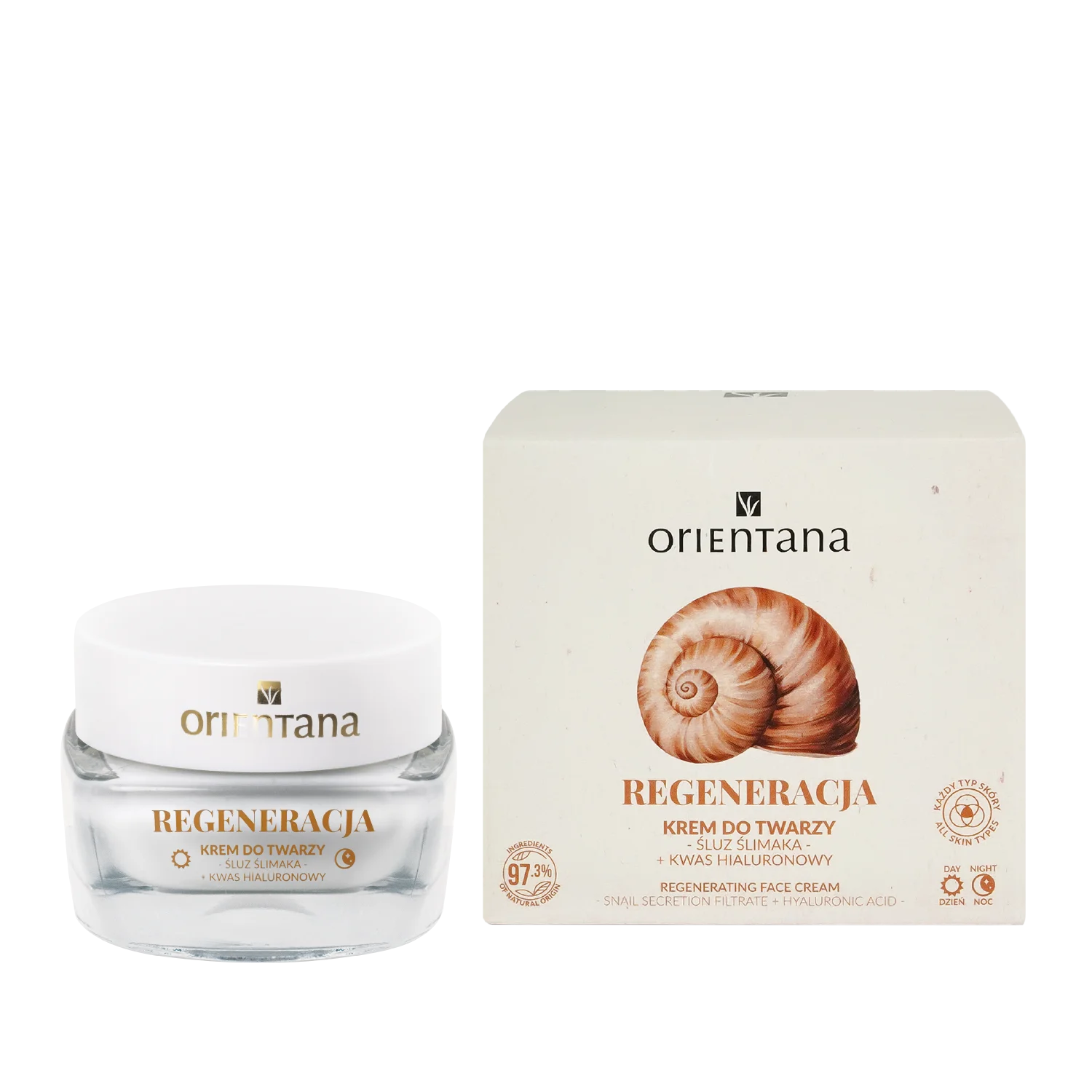
It is a plant alternative to the "snail slime effect" - usually works to smooth, soothe, and support hydration.
Does phyto-retinol work like retinol?
These are retinoid-like solutions - they can support smoothing and anti-aging, often with better tolerance, but the mechanism and strength of action depend on the ingredient.
Is biotechnology compliant with clean beauty?
Mostly yes, because many biotech processes reduce raw material consumption and allow ingredients to be produced in a more controlled and sustainable way.
Are biotechnological cosmetics vegan?
Very often, because biotechnology enables the creation of alternatives to animal-derived ingredients (e.g., some "collagen" or "mucin" effects).
What are the limitations of biotechnology in cosmetics?
Mainly costs, difficulty of scaling, and the need for consumer education, but from a quality perspective, it is often a step forward.
Are phytocosmetics with biotechnology "better" than classically natural ones?
Not always "better," but usually more predictable and stable - these are different approaches that can complement each other.