
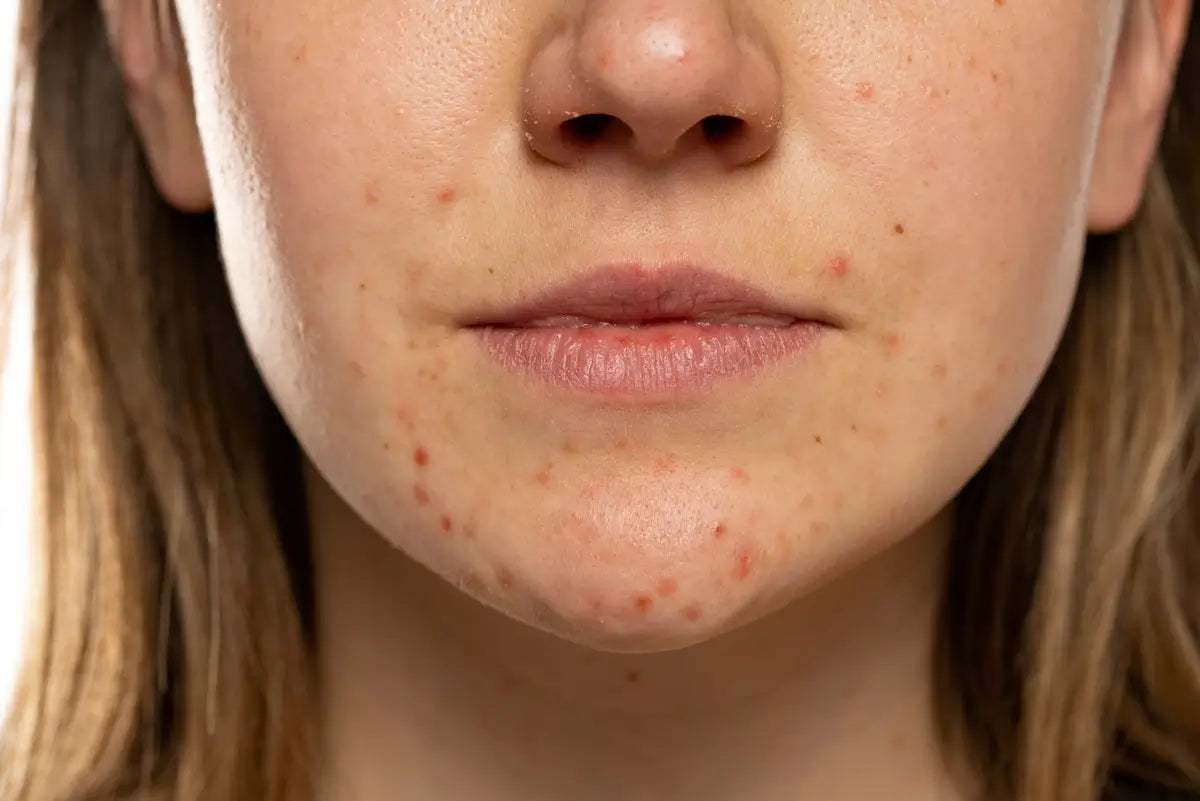
The "triangle of death " is a term that sounds ominous and has become a myth over the years. Despite its dramatic name, it describes a very real, sensitive area of the face—the area between the tip of the nose , the corners of the mouth , and the chin . Its unique anatomy means infections can develop there more quickly than in other areas. In times of growing concern for skin health, imperfections, and barrier care, understanding the rules of conduct in this area is crucial for both safety and aesthetics.
The following article is an expert discussion of the topic in the context of dermatology and modern care, with an emphasis on safe active ingredients and product recommendations.
Contents:
- What is the Triangle of Death and why does this zone evoke so much emotion?
- Anatomy and vessels - why is the risk of infection higher?
- The most common skin problems in the triangle of death
- Why shouldn't you squeeze out lesions in this area?
- Safe care - what works and what to avoid?
- The Triangle of Death and Makeup, Hair Removal, and Shaving
- Spot Treatment: What Really Works?
- Recommended Orientana products
- Facts and myths about the triangle of death
- Prevention and barrier care
- Questions and Answers
Read also:
Tremella cream - a light cream that regulates sebum and moisturizes
Facial Cleansing - The Most Common Mistakes and Problems in Skin Care
What is the Triangle of Death and why does this zone evoke so much emotion?
The danger triangle of the face is the area of the face that extends from the bridge of the nose, through the nostrils, to the corners of the mouth and chin. Dermatologists call this area this because the veins beneath it connect to the cavernous sinus, a structure located inside the skull. The theory, then, isn't based on scaremongering, but on anatomical fact: infections can spread more quickly here and cause more serious complications .
Of course, dramatic scenarios are rare. However, everyday imperfections—purulent lumps, blackheads, cold sores, or post-hair removal inflammation—deserve special attention.
Anatomy and vessels why is the risk of infection higher?
The venous network and the risk of infection
Within the triangle of death, the facial vein and angular vein connect to the cavernous sinus. This means that bacteria extruded or introduced deeper into the vascular system can migrate deeper into the vascular system.
Sebaceous gland density
The skin of the nose and lips is rich in sebaceous glands, which can become easily clogged. This environment favors the growth of bacteria, particularly Cutibacterium acnes and Staphylococcus aureus.
Micro-injuries of everyday life
This is a zone intensively exposed to:
• rubbing,
• food,
• makeup,
• depilation,
• shaving,
• cold and damp.
Each micro-trauma increases the chance of developing inflammatory changes.
The most common skin problems in the triangle of death
Blackheads and purulent lumps
The most common problem, especially in oily and combination skin, is open comedones (blackheads) that often appear on the sides of the nose, while pus-filled lumps appear around the mouth and chin.
Furuncle or furunculosis
A boil is the most serious form of infection in this area – a deep infection of the hair follicle, painful and swollen. It should never be squeezed.
Herpes
HSV-1 often becomes active around the mouth, and scratching the lesions increases pain and the risk of secondary infections.
Irritation after depilation or shaving
The mustache, chin and area around the mouth are areas prone to ingrown hairs and folliculitis.
Maskne - changes caused by wearing masks
The accumulated heat, water vapor, and bacteria in the mask often aggravate acne in this zone.
Why shouldn't you squeeze out lesions in this area?
Squeezing changes into the triangle of death can lead to:
Introducing bacteria into the skin
When pressure is applied, not only the follicle opening ruptures but also deeper structures. This opens the door to subcutaneous infections.
Increased inflammation
Pressure increases swelling, redness and pain - the lesion takes longer to heal.
Keloids and post-inflammatory hyperpigmentation (PIH)
This is an area of greater melanocyte reactivity. The risk of brown spots is very high.
Rare but possible vascular complications
Dermatology describes cases of:
• cavernous sinus thrombosis,
• soft tissue inflammation,
• phlegmon.
We don't scare you, we teach caution. Proper care minimizes risk.
Safe care - what works and what to avoid?
Cleansing: gently, without rubbing
Recommended ingredients:
• gluconolactone (PHA) - gentle exfoliation,
• date extract - moisturizing and soothing,
• natural humectants.
Important: in this zone it is better to avoid sonic brushes, mechanical scrubs and rough towels.
Active substances safe in the triangle of death
• Niacinamide - reduces inflammation, evens out skin tone.
• Azeloglycine / azelaic acid - works on imperfections and redness.
• PHA (gluconolactone) - does not irritate the hydrolipid barrier.
• CICA (Centella asiatica) - soothes and accelerates healing.
• Trehalose + ceramides - regeneration of the skin barrier.
• Plant mucin - soothing, gentle hydration.
What to avoid during active changes?
• strong retinoids (unless recommended by a dermatologist),
• ethyl alcohol in tonics,
• comedogenic oils,
• facial massages,
• waxing,
• dermarollers.
Barrier care
Skin in the triangle of death reacts quickly to dryness and irritation. Therefore:
• trehalose,
• ceramides,
• adaptogenic extracts,
• phyto-mucin
are perfect for everyday care.
The Triangle of Death and Makeup, Hair Removal, and Shaving
Makeup
● Avoid heavy, comedogenic foundations.
● Opt for mineral formulas.
● Wash sponges after each use.
Mustache depilation
Best:
● flossing,
● enzymatic hair removal,
● depilatory creams with a gentle formula.
Avoid waxing if inflammation is active.
Shaving the beard and mouth area
● disposable razor only a few times,
● shaving with the hair,
● After shaving, a gentle soothing serum.
Spot Treatment: What Really Works?
Most effective points:
✓ azelaic acid or azeloglicine
✓ niacinamide
✓ gluconolactone
✓ cool water compresses
Never use:
× toothpastes
× spirit
× undiluted essential oils
Recommended Orientana products
Smoothing and soothing serum with phytomucin

Perfect for irritation and redness in the triangle of death. Plant mucin promotes healing, while extracts soothe the skin.
Moisturizing tonic-essence with gluconolactone
A safe alternative to peels - gently exfoliates PHA and strengthens the barrier.

Ashwagandha + CICA + Niacinamide serum
Reduces redness, inflammation and the risk of post-inflammatory discoloration.

Gentle facial cleansing gel with gluconolactone

Gentle cleansing without friction and aggressive detergents.
Facts and myths about the triangle of death
Myth : "This zone is deadly dangerous at all times and for everyone."
No. It just requires caution.
Myth: "You can't use any strong active ingredients."
You can, as long as they are mild and barrier.
Fact: Squeezing increases the risk of infection.
Pressure breaks below the skin, not on the surface.
Fact: hair removal can increase inflammation.
Especially waxing and shaving against the grain.
Prevention and barrier care
The most important rules of care
✓ Strong moisturizing - trehalose, mucin, humectants
✓ Gentle exfoliation - gluconolactone
✓ Barrier protection - ceramides
✓ Minimalist care during periods of exacerbation
✓ Avoiding squeezing
✓ Hygiene of phones, masks, hands
Diet
- omega-3 fatty acids,
- polyphenols,
- vitamin C,
- limiting sugar.
Oxidative stress increases inflammation levels, adaptogens can limit its effects.
Questions and Answers
Is it really illegal to pop pimples in the triangle of death?
No, it is associated with an increased risk of infection.
Does juicing always end in complications?
No, but the risk is higher than in other parts of the face.
What are the first symptoms of infection?
Throbbing pain, swelling, fever, warm skin.
Can retinol be used?
Yes, but not for active lesions and in low concentrations.
Is gluconolactone safe?
Yes, it is the most delicate acid.
Does niacinamide help with lumps?
Yes, it has anti-inflammatory properties.
Does mustache hair removal cause inflammation?
Maybe, especially wax.
What to do after depilation?
Apply soothing serum or mucin.
Does makeup make changes worse?
Heavy sleepers yes.
Are clay masks recommended?
If the skin is not irritated then yes.
Can oils be used?
Light and non-comedogenic, yes.
Does mucin help heal?
Yes, it is a humectant and soothing ingredient.
Is the triangle of death more prone to discoloration?
Yes, PIH are more common here.
Are herpes in this area dangerous?
Yes, scratching increases the risk of superinfection.
Are AHA acids recommended?
Not with active inflammation.
What about disposable razors?
Replace frequently, do not use dull ones.
Can adaptogens help?
Yes, they reduce oxidative stress.
Can pressing on lesions affect blood vessels?
Yes, it leads to telangiectasia.
Are sheet masks safe?
Yes, if they don't have alcohol.
Can I use ceramide serum every day?
Yes, this is the basis of barrier care.
Want to care for the most demanding skin area of your face? Choose gentleness, barrier actives, and regular care. Check out Orientana cosmetics, which soothe, regenerate, and support the skin in the death triangle area.
The triangle of death is not a myth, but an anatomically sensitive area of the face that requires careful care. Understanding its specifics allows you to avoid inflammation, irritation, discoloration, and, in rare cases, more serious complications.
The most important thing is to:
• do not squeeze out changes,
• take care of the hydrolipid barrier,
• use gentle agents,
• care for your skin according to its needs.
Orientana cosmetics perfectly fit into this philosophy - they soothe, moisturize and support the regeneration of even the most demanding areas.