
Dry skin is a common dermatological problem that affects people of all ages. It is characterized by insufficient hydration of the stratum corneum, leading to roughness, flaking, tightness, and a tendency to irritation. According to epidemiological studies, dry skin is particularly severe during winter and in regions with low humidity. Natural cosmetics are becoming an increasingly popular skincare solution due to their gentle nature and lack of synthetic irritants.
Dry skin and its causes
Dry skin can develop as a result of both exogenous and endogenous factors. Exogenous factors include environmental conditions such as low humidity, exposure to wind, frost, and UV radiation.
Another cause is improper care: frequent use of strong detergents and hot baths, which strip away the protective lipids of the epidermis. Dry skin also affects us due to a poor diet. A diet low in unsaturated fats and vitamins – especially vitamins A, E, and D. 
The role of natural cosmetics in dry skin care
Natural cosmetics are characterized by the presence of plant and mineral-derived ingredients that support the skin's natural regenerative mechanisms. These ingredients are divided into humectants – water-binding substances such as plant glycerin, aloe vera, and hyaluronic acid. Research shows that glycerin improves stratum corneum hydration after just one application, as demonstrated in a study by Wissing and Müller (2002).
Emollients are plant oils that form an occlusive layer on the skin's surface, preventing water loss. A study by Loden (2003) showed that emollients effectively restore the epidermal lipid barrier.
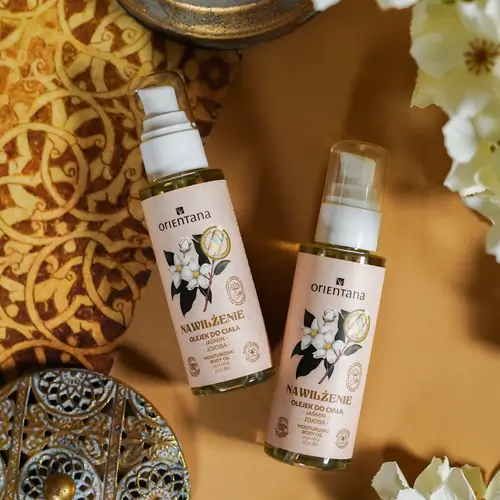
Dry skin will thank you for oiling your body . Create a home spa and allow yourself a moment of relaxation. Treat yourself to a massage with jasmine oil , which will not only moisturize your skin but also provide aromatherapy.
Proven effects of natural cosmetics
Dry skin is a problem that can be effectively alleviated by using natural cosmetics containing humectants, emollients, and antioxidants. Numerous scientific studies confirm the effectiveness of ingredients such as glycerin, hyaluronic acid, and vegetable oils in restoring the skin's hydrolipid balance. The effects of natural ingredients and cosmetics on dry skin prove their remarkable impact. How are the effects of moisturizing cosmetics tested?
Measuring skin hydration (corneometry)
Skin hydration levels after cosmetic application are measured using devices such as a corneometer. Tests on aloe vera extracts have shown that application of aloe vera gel increases moisture levels in the stratum corneum by 15–20% after two weeks of use (Surjushe et al., 2008).
Dermatological tests
Tests on volunteers with sensitive skin are conducted to assess the tolerance of active ingredients. A study of the effects of argan oil found that regular use reduced skin roughness by 43% after four weeks of application (Bouguenina et al., 2015).
Antioxidant tests (DPPH)
Assessment of the free radical-neutralizing capacity of natural cosmetics. A study conducted on green tea extracts demonstrated high effectiveness in protecting epidermal lipids from peroxidation (Sharma et al., 2010).
Causes of itchy skin
Dry skin is one of the most common causes of itching, especially during winter or in dry climates. It is characterized by flaking, redness, and a feeling of tightness, which can be exacerbated by improper skin care or environmental factors. Research confirms that low humidity increases transepidermal water loss (TEWL) by up to 50%, leading to a deterioration of the skin's hydrolipid barrier.
Allergies are another common cause of dry skin and can result from contact with cosmetics, detergents, fabrics, or the consumption of certain foods. These symptoms often coexist with rashes or hives, indicating an immune system reaction to allergens. According to epidemiological studies, approximately 20% of the population experiences an allergic reaction, manifesting as itchy skin, at least once in their life.
Bites from insects such as mosquitoes, fleas, lice, and bedbugs can also cause itchy skin. Substances contained in insect saliva trigger an inflammatory response at the bite site, which is confirmed by immunological studies showing elevated histamine levels in skin lesions.
Many skin conditions are also associated with chronic itching. Atopic dermatitis (AD), a chronic inflammatory skin condition, is associated with dryness, itching, and inflammation. Psoriasis, on the other hand, manifests as itchy, scaly patches resulting from abnormal keratinocyte proliferation. Seborrheic dermatitis often affects the scalp and face, causing itching and flaking of the skin in these areas. Fungal infections, such as athlete's foot or jock itch, and parasitic infections, including scabies, are other causes of itching, as confirmed by numerous dermatological studies.
Some internal diseases can manifest as itchy skin as one of their initial symptoms. Liver diseases such as cirrhosis, renal failure, diabetes, and hypothyroidism alter body function, which can lead to skin discomfort. For example, in patients with chronic renal failure, itching occurs in up to 40% of cases, which is associated with disturbances in calcium and phosphate metabolism.
Stress and psychological disorders can also exacerbate itching, a condition known as psychogenic itch. Conditions such as anxiety, neurosis, or depression can influence the perception of itch, leading to worsening symptoms. Neurophysiological studies indicate that activation of the hypothalamic-pituitary-adrenal (HPA) axis can significantly influence the occurrence of these symptoms.
Some medications, particularly opioids and antibiotics, can cause itching as a side effect. This mechanism is often related to the release of histamine or other changes in the nervous system. In pregnant women, hormonal changes, such as increased estrogen levels, can lead to itching, particularly in the abdomen and thighs. Studies show that approximately 20% of women in the third trimester experience itching as a symptom of these physiological changes.
Dry skin and itching can have various causes, and their proper diagnosis and treatment requires taking into account many factors, such as the environment, the patient's health, and the pharmacological therapies used.
Home remedies for itchy skin
Effective hydration for dry skin can be achieved by using body butters and oils. These should contain as many naturally derived ingredients as possible, such as shea butter, cocoa butter, and kokum butter, known for their moisture-retaining properties.
When using body oils, pay attention to their ingredients and avoid those containing paraffin or mineral oil. These are petroleum derivatives.
Soothing baths are also an important part of skincare. Oatmeal, baking soda, or moisturizing oils can be added to support the regeneration of the skin's protective barrier and soothe irritation. In cases of sudden discomfort, cold compresses applied to itchy areas are effective, reducing inflammatory reactions and providing relief.
It is also important to avoid cosmetics containing alcohol, which can further irritate the skin and exacerbate dryness.
Wearing loose clothing made of natural fabrics, such as cotton, minimizes the risk of mechanical irritation and supports the epidermal regeneration process.
In the context of skin care, diet also plays an extremely important role, as it should be rich in omega-3 fatty acids, vitamins A, C, E and zinc to support cell renewal and ensure proper nourishment of the skin from within.
the best oils

sesame oil
Sesame oil has a number of beneficial properties for the skin, as confirmed by scientific data on its composition and effects. It contains approximately 40-60% unsaturated fatty acids, including 35-50% oleic acid, 35-45% linoleic acid, and 7-12% palmitic acid.
Its high vitamin E content, 50-60 mg per 100 g, makes it an effective antioxidant that helps protect skin from oxidative stress. Applying sesame oil to the skin reduces transepidermal water loss (TEWL) by up to 22% in the first 24 hours, and regular use over four weeks increases skin hydration by approximately 30%.
The lignans contained in the oil, such as sesamol and sesamolin, have strong antioxidant properties, with sesamol being estimated to be 10-20 times more effective than vitamin E in neutralizing free radicals.
The stability of sesame oil depends on storage conditions - in cold stores it maintains its properties for about 3-4 months, while at room temperature the shelf life is 1 to 2 months, after which the active ingredients degrade.
In traditional Ayurvedic practices, a warm sesame oil massage, lasting 15 to 45 minutes daily and continued for 2-4 weeks, improves skin hydration, firms it, and reduces toxin levels in the body. Sesame oil is therefore a valuable skincare ingredient whose effectiveness has been documented in both scientific research and traditional medicine.
Apricot kernel oil
Apricot kernel oil is valued for its moisturizing and regenerating properties, which result from its rich chemical composition. It contains 50-60% oleic acid and approximately 25-30% linoleic acid, making it an excellent supporter of the skin's hydrolipid barrier, protecting it from excessive water loss.
Thanks to the presence of vitamin E at a concentration of approximately 45 mg per 100 g of oil, it acts as a strong antioxidant that helps neutralize free radicals responsible for the skin aging process.
It's also a source of vitamin A, which supports epidermal cell regeneration and improves skin elasticity. Apricot kernel oil is a light, easily absorbed emollient, making it suitable for both dry and sensitive skin without the risk of clogging pores. Studies show that regular use of apricot kernel oil can increase skin hydration by up to 25% within a few weeks of use.
Grape seed oil
Grape seed oil is known for its light and fast-absorbing nature, making it an ideal choice for oily and combination skin. Its composition is based primarily on linoleic acid, which constitutes approximately 65-75% of the oil's content. This polyunsaturated fatty acid plays a key role in rebuilding the skin's lipid barrier and regulating sebum production.
Additionally, grape seed oil contains proanthocyanidins, polyphenolic compounds with extremely powerful antioxidant properties that are 20 times more powerful than vitamin E and 50 times more powerful than vitamin C in neutralizing free radicals. These properties make the oil effective in counteracting the aging process, protecting the skin from damage caused by UV radiation and environmental pollutants.
Additionally, its vitamin E content is approximately 29 mg per 100 g, which enhances its regenerative and protective effects. Studies have shown that using grapeseed oil can increase skin hydration by 20-30% after several weeks of regular application.
Jasmine oil
Jasmine oil, extracted from jasmine flowers, is a product with exceptional skincare and aromatherapy properties. Its benefits for the skin stem from its phytosterols, which support epidermal regeneration, and antioxidants, which protect the skin from oxidative stress and environmental factors. Jasmine oil also has a soothing effect, making it particularly helpful for sensitive, irritated, and inflammation-prone skin.
Studies have shown that regular use of jasmine oil improves skin elasticity and stimulates the cell regeneration process, making it effective in the care of mature skin.
Moreover, its aromatherapeutic properties, due to the presence of linalool and esters, reduce stress and improve well-being. Jasmine oil, although less commonly used on its own, is an excellent addition to carrier oils such as jojoba or almond oil, enhancing its nourishing and regenerative properties.