
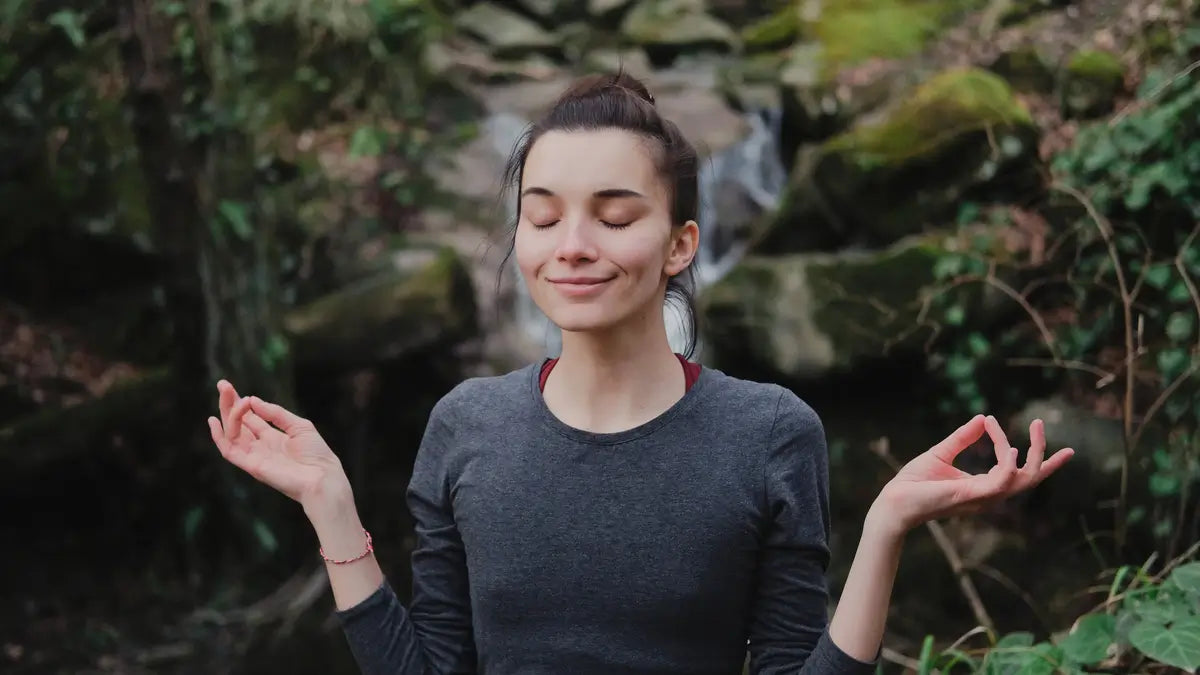
Prana, a word derived from Sanskrit, is one of the most important concepts in Ayurveda and yoga. Described as "life energy," "the force that sustains existence," or "the subtle movement of breath," prana forms the foundation of physical, mental, and emotional health. In the Ayurvedic tradition, the flow of prana determines a person's vitality, emotional balance, nervous stability, quality of sleep, and immunity.
Today's science does not measure "prana" as a substance. However, numerous studies show that practices affecting the flow of prana, primarily breath, yoga, meditation, and life rhythm, have a direct impact on the nervous, hormonal, immune, and emotional systems.
This article combines Ayurvedic wisdom with the latest scientific evidence to show what prana is, how it works, and how it can be genuinely supported.

What is prana?
Ayurvedic definition
In Ayurveda, prana means "that which moves." "Pra" means "forward," and "ana" means "to breathe, to live."
According to classical texts (including Charaka Samhita), prana sustains:
- breathing and respiratory functions,
- heartbeat and circulation,
- the functioning of the senses,
- the movement of thoughts and emotions,
- digestion and metabolism,
- life forces (ojas).
Prana and Western science
Researchers emphasize that prana can be understood as a holistic term for the functioning of the nervous system, especially the balance between the sympathetic (stress, arousal) and parasympathetic (regeneration, calm) systems.
Scientists do not talk about "prana" but about:
- HRV (Heart Rate Variability) - heart rate variability,
- stress response (cortisol),
- neuroplasticity,
- inflammatory response,
- emotion regulation.
All these parameters change under the influence of pranic practices, which allows for connecting both perspectives.

Five prana vayus - subtle movements of energy
Ayurveda describes five types of prana, called vayus ("winds," energy movements). Each is responsible for a different function:
Prana Vayu - energy of breath, heart, and concentration
Location: chest, head.
Responsible for breath, heart function, receiving stimuli, mental clarity.
Apana Vayu - energy of elimination and grounding
Location: pelvis, lower abdomen.
Regulates defecation, menstrual cycle, childbirth, detoxification.
Samana Vayu - energy of digestion
Location: stomach area.
Supports digestion, assimilation, metabolism, and digestive fire (agni).
Udana Vayu - energy of expression
Location: throat.
Responsible for speech, self-expression, self-confidence.
Vyana Vayu - energy of circulation
Location: entire body.
Supports circulation, movement, warmth, and nutrient transport.

Prana and modern science - what do we actually know?
Although prana cannot be measured by equipment, the effects of its practices are well-documented.
Breathing and the nervous system and HRV
Studies on "slow breathing" and pranayama show:
-
Increased HRV – an indicator of nervous balance and stress resilience.
Source: Frontiers in Human Neuroscience, 2017. -
Decreased sympathetic (stress) nervous system activity and increased parasympathetic (relaxation) nervous system activity.
Source: Journal of Clinical Psychiatry, 2020. -
Slowed breathing (6 breaths/min) lowers heart rate and calms brain waves.
Source: Scientific Reports, 2021.
This is scientific evidence for what Ayurveda calls "calming prana."
Pranayama and stress, anxiety, and mood
A 2020 meta-analysis (JAMA Network Open) found that regular breathing practices:
- reduce anxiety symptoms,
- improve mood,
- decrease physical tension.
Other studies (International Journal of Yoga, 2013) indicate that pranayama increases GABA levels – a calming neurotransmitter.
Prana and the immune system
Studies on yoga and controlled breathing have shown:
- reduced levels of inflammatory markers (CRP, IL-6),
- decreased oxidative stress,
- improved immunological parameters.
Sources: Oxidative Medicine and Cellular Longevity, 2017; Frontiers in Physiology, 2020.
Meditation and yoga and brain structure
MRI studies show:
- increased cortical thickness in areas responsible for emotion regulation,
- improved working memory function,
- reduced amygdala activity (fear response).
Source: Psychiatry Research: Neuroimaging, 2011; Harvard Medical School.
Ayurveda metaphorically describes all of this as "calming prana in the mind."
How to support the flow of prana? Rituals with proven benefits
Ayurveda knows hundreds of practices, but science confirms the effectiveness of a few in particular.
Conscious breathing (slow breathing)
The simplest and best-researched method of working with prana.
Action confirmed by research:
- lowers cortisol (stress),
- increases HRV,
- regulates emotions,
- improves sleep.
How to practice:
- Inhale for 4 seconds
- Exhale for 6 seconds
- 5-10 minutes daily
This rhythm is consistent with research and completely safe.
Nadi Shodhana - alternate nostril breathing
According to Ayurveda, it purifies the energy channels (nadis).
According to science:
- balances brain hemisphere activity (EEG),
- reduces anxiety,
- increases concentration.
Source: International Journal of Psychophysiology, 2017.
Movement: yoga, walks, slow dance
Studies are very consistent:
- yoga reduces stress,
- lowers blood pressure,
- improves nervous system flexibility,
- increases HRV,
- improves sleep quality.
Sources: Journal of Clinical Medicine 2022; Frontiers in Psychology 2021.
In Ayurveda, movement = distribution of prana (Vyana Vayu).
Pranic diet (sattvic)
Ayurveda speaks of food "rich in prana" – fresh, unprocessed, seasonal.
Modern studies confirm that a diet:
- rich in vegetables, fruits, plants,
- low in processing,
- with limited sugar and frying,
reduces inflammation and improves well-being.
Source: Lancet Public Health, 2019; Nutrients, 2020.
Ayurveda uses a simple term for this: "prana increases."
Oil massage (abhyanga)
Studies on touch and massage show:
- reduced cortisol (an average of 31% in meta-analyses),
- increased serotonin and dopamine,
- improved sleep,
- decreased tension.
Source: Touch Research Institute, University of Miami; Journal of Alternative and Complementary Medicine.
In Ayurveda, abhyanga "calms scattered prana."
Digital detox and sensory hygiene
Ayurveda teaches that prana "escapes" when the senses work incessantly.
Western studies confirm this:
-
exposure to screens before bed prolongs sleep onset by 30–60 minutes
Source: Sleep Medicine Reviews, 2015. -
excessive stimuli increase neurohormonal stress levels
Source: PNAS, 2018.
Moments of silence and limiting screens regulate the nervous system, i.e., the pranic energy flow.
Prana and emotions: Ayurvedic psychology and science
In Ayurveda, prana disorders are synonymous with Vata disorders – the dosha of air and movement.
Typical symptoms:
- racing thoughts,
- anxiety and restlessness,
- insomnia,
- sensitivity to stimuli,
- dryness of the body (symbolically - "wind dries out prana").
Science confirms this:
- irregular breathing increases sympathetic nervous system activity (stress),
- breathing practices reduce anxiety,
- daily regularity stabilizes circadian rhythms and improves mood.
Is prana scientifically proven?
The short and honest answer:
No – prana as a metaphysical energy is not measured by equipment.
Yes – its effects are documented in hundreds of studies.
Scientists study:
- breathing,
- heart rhythm (HRV),
- oxidative stress,
- inflammatory markers,
- brain activity (EEG, fMRI),
- sleep parameters.
All these indicators improve under the influence of techniques that Ayurveda describes as "harmonizing prana."
Therefore, today we speak of a "Western approach to prana" integrating breath, psychology, neurobiology, and lifestyle medicine.
How to start working with prana? A simple guide
Morning - 5 minutes of breathing
- 4 seconds inhale
- 6 seconds exhale
- 5-10 minutes
Studies show improvement in HRV after just 1 week.
During the day - movement
Even a 10-minute walk after a meal.
Evening – limit screens 1 hour before bed
A scientifically proven way to improve sleep quality.
3 times a week – gentle yoga or stretching
Studies show stress reduction after just 8–12 sessions.
1–2 times a week – oil massage
Even a self-massage of 10 minutes improves nervous system parameters.
Frequently Asked Questions about PRANA
Is prana energy like electricity?
No. It is a metaphorical description of the functioning of the nervous system, breath, and vital life force.
Is there scientific evidence for it?
Yes, for the effects of breath, yoga, meditation, and rituals that regulate the nervous system.
How much should I practice to feel the effects?
Studies show initial changes after just 5 minutes of slow breathing daily for a week.
Is prana related to chakras?
In yoga, yes – prana flows through channels (nadis) and energy centers (chakras). These are metaphors describing psycho-physical experiences.
Does prana help with stress?
Yes. Studies show a reduction in anxiety, a drop in cortisol, and improved HRV.
Prana is an ancient concept, but its practical applications are exceptionally relevant. What Ayurveda describes as the "flow of life energy," modern science translates as:
- nervous system regulation,
- improved HRV,
- stress reduction,
- stabilization of daily rhythm,
- healthier emotional functioning.
Prana is not something magical. It is an experiential quality of life – breath, rhythm, movement, sensory calmness, and conscious self-care. And all of this now has strong scientific foundations.