Parabens are one of the most recognizable ingredients in cosmetics, and at the same time, one of the most controversial. Over the years, they have become a symbol of everything that some consumers want to avoid in skincare today: "chemicals," synthetic additives, and unclear INCI names. At the same time, parabens are among the best-researched preservatives in the history of cosmetology and are still legally used in the European Union.
Does this mean that parabens are completely safe? Or should they still be avoided? And why are more and more brands – including Orientana – consciously giving up parabens, even though they are not banned in cosmetics?
Natural cosmetic ingredients - how to read and understand INCI lists
This article is dedicated to parabens: without fear-mongering, without oversimplification, and without marketing slogans. We explain the facts, the scientific and regulatory context, and show how to approach the topic of parabens consciously.
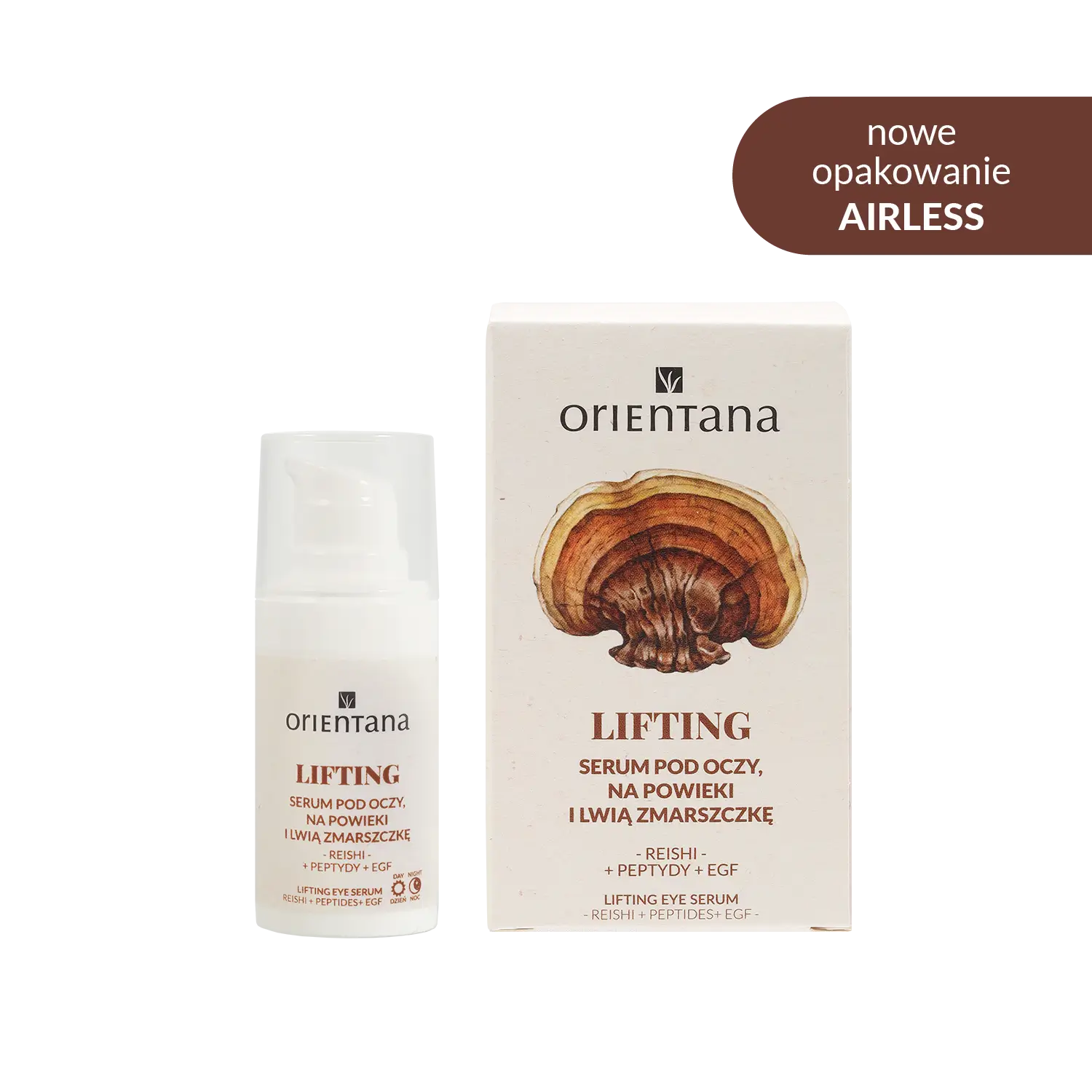
Paraben-free cream

What are parabens?
Parabens are a group of synthetic preservatives used in cosmetics, medicines, and hygiene products. Chemically, they are esters of p-hydroxybenzoic acid, and their main function is to protect the product from the growth of microorganisms: bacteria, yeasts, and molds.
The most common parabens in cosmetics are:
- methylparaben,
- ethylparaben,
- propylparaben,
- butylparaben.
Parabens began to be used in cosmetics as early as the 1930s. For decades, they were considered one of the most stable and effective preservatives – particularly well-tolerated by the skin compared to many other preserving substances.
Paraben-free cosmetics

Why are parabens used in cosmetics?
A cosmetic product containing water, plant extracts, or biological ingredients must be microbiologically protected. Without preservatives, it would become an ideal environment for the growth of bacteria and fungi, which could pose a real threat to the user's health.
Parabens have been popular for years because:
- they are effective at low concentrations,
- they have a broad spectrum of antimicrobial activity,
- they are stable in various pH ranges,
- they rarely cause allergic reactions.
From the perspective of cosmetic technology, parabens were long considered the "gold standard" of preservation.
Propanediol - what it is and why it has become one of the safest ingredients in natural cosmetics?
Paraben-free serum ampoules

Where did parabens' bad reputation come from?
The negative image of parabens did not arise without reason, but largely results from misinterpretation of research and media oversimplification.
Reports of estrogen-like activity
Some laboratory studies have shown that parabens can exhibit weak estrogen-like activity, meaning the ability to bind to estrogen receptors.
Key facts often omitted in media coverage:
- this effect is many times weaker than that of natural estrogens,
- it has been observed mainly in in vitro studies or animal models,
- the doses used in studies were incomparably higher than those used in cosmetics.
Parabens and breast cancer - what does research say?
A frequently cited argument is the presence of trace amounts of parabens in samples of tumor tissues. However, these studies have not confirmed a causal link between the use of cosmetics with parabens and the development of breast cancer.
European and global regulatory institutions explicitly emphasize that there is a lack of scientific evidence to confirm the carcinogenicity of parabens at permissible concentrations.
Ayurvedic cosmetics without parabens

More about conscious skincare principles can be found in the natural cosmetics section.
Are parabens banned in cosmetics?
No - parabens are not completely banned.
In the European Union, the use of parabens is regulated by Regulation (EC) No 1223/2009. Each paraben has been evaluated by the Scientific Committee on Consumer Safety (SCCS).
- Methylparaben and ethylparaben are considered safe at specific concentrations.
- Some parabens (e.g., isopropylparaben, isobutylparaben) have been banned due to a lack of sufficient safety data.
This shows that the problem is not the presence of parabens as a group, but specific compounds and their concentrations.
Are parabens safe for the skin?
From a dermatological perspective, parabens:
- rarely cause contact allergies,
- are well tolerated even by sensitive skin,
- in many cases are milder than some alternative preservatives.
At the same time, the safety of a cosmetic always depends on the entire formula, not a single ingredient. Skin can react individually, regardless of whether the product contains parabens or not.
Hair cosmetics without parabens

Parabens vs. natural cosmetics and clean beauty
Parabens are synthetic substances and are not permitted in certified natural cosmetics. In the clean beauty trend, not only toxicological safety but also:
- biodegradability,
- origin of ingredients,
- consistency with a nature-based skincare philosophy.
It is in this context that many brands decide to forgo parabens.
Why doesn't Orientana use parabens?
Although parabens are not banned, the Orientana brand consciously does not use them. This decision stems from the brand's philosophy, not from a desire to demonize these substances.
Orientana:
- bases its formulations on plant, Ayurvedic, and adaptogenic ingredients,
- uses modern, safe preservative systems without parabens,
- responds to the needs of consumers looking for "paraben-free" cosmetics,
- focuses on transparency and education, not fear.
Is a paraben-free cosmetic better?
There is no universal answer. A paraben-free cosmetic is not automatically better or safer.
The quality of a product is determined by:
- the entire formula,
- the quality of raw materials,
- microbiological testing,
- production control.
The absence of parabens is a conscious choice, not a guarantee of effectiveness.
How to read INCI and recognize parabens?
You can recognize parabens in the INCI list by the "-paraben" ending, e.g., methylparaben, propylparaben. They are usually found at the end of the ingredient list because they are used in low concentrations.
Consciously reading INCI allows you to make decisions consistent with your values, without falling for myths.
Common myths about parabens
Myth 1: Parabens are banned in the EU - false.
Myth 2: Parabens cause cancer - no scientific evidence.
Myth 3: Paraben-free cosmetics don't need preservatives - every cosmetic needs to be preserved.
Myth 4: Natural cosmetics are always safer - safety depends on the formula.
Questions about parabens
Are parabens safe?
Yes, parabens approved for use in the EU are considered safe at specified concentrations.
Are parabens harmful to hormones?
They exhibit very weak estrogen-like activity, incomparable to natural hormones.
Are parabens banned in natural cosmetics?
Yes, they are not permitted in certified natural cosmetics.
Why doesn't Orientana use parabens?
Due to the brand's philosophy and consumer preferences, not because they are banned.
Do paraben-free cosmetics have a shorter shelf life?
No, modern preservative systems ensure safety and stability.
Summary
Parabens are among the best-researched preservatives in cosmetics. They are not banned and are considered safe at specific concentrations. At the same time, more and more brands, including Orientana, are consciously giving them up, offering alternatives consistent with the philosophy of natural skincare.
Conscious skincare is about knowledge, context, and choice - not fear.